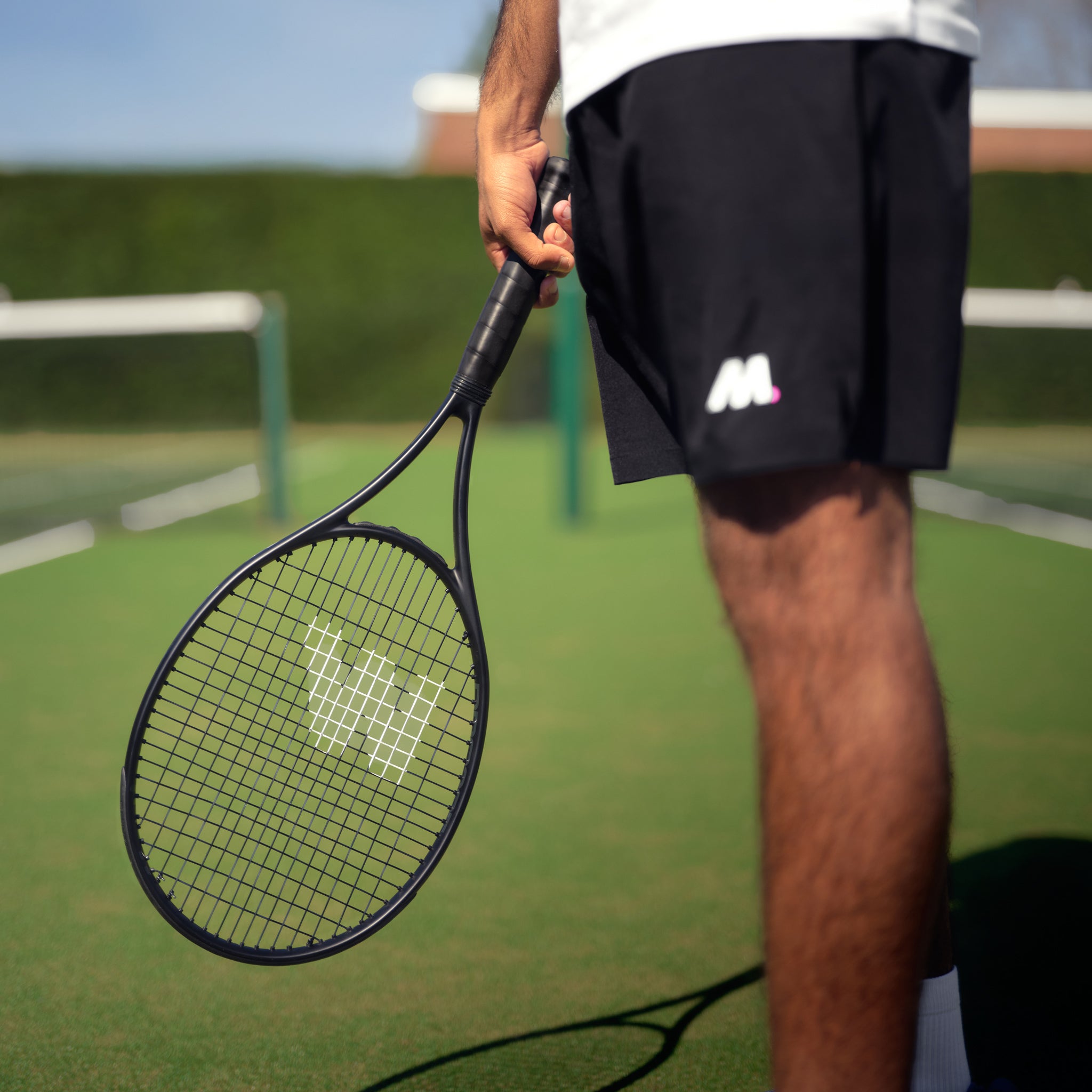







The satisfying sound of a perfectly executed slice, the ball floating just beyond your opponent's reach before dying on the bounce. This is the artistry of back spin tennis at work. Far from being a mere defensive shot, backspin represents one of the most nuanced and tactically sophisticated elements of the sport. For coaches working with developing players and dedicated amateurs looking to elevate their game, understanding the mechanics and applications of backspin can unlock new dimensions of court craft and control.
The Physics Behind the Magic
What actually happens when you apply backspin to a tennis ball? The science is more fascinating than you might expect.
The physics of backspin involves creating a rotation where the top of the ball moves backwards relative to its forward flight path. This rotation fundamentally alters how air flows around the ball, creating what's known as the Magnus effect.
Key physical properties include:
- Reduced forward bounce angle upon landing
- Lower bounce height compared to topspin shots
- Greater control over ball trajectory
- Increased hang time in the air
When a ball with backspin strikes the court surface, the rotational energy works against the forward momentum, causing it to 'bite' and stay low. This makes back spin tennis particularly effective on faster surfaces like grass and hard courts, where the reduced bounce can catch opponents off guard.
The amount of spin you generate directly affects these characteristics. Understanding how backspin works through slow-motion analysis reveals the intricate relationship between racquet angle, swing path, and ball rotation. More spin means greater control but potentially less pace, requiring players to find their optimal balance.
Equipment Considerations
Your choice of racquet and strings significantly impacts your ability to generate and control backspin. The string pattern, tension, and racquet head size all contribute to how much 'grip' you can achieve on the ball.
Players focusing on back spin tennis techniques often benefit from understanding tennis racket specifications that enhance touch and feel. A slightly more open string pattern can help bite into the ball, whilst controlled tension provides the feedback necessary for precision shots.
Technical Execution: The Backhand Slice
The backhand slice remains the most common application of backspin in tennis. Executing this shot with consistency requires specific technical elements.
| Technical Element | Key Focus | Common Error |
|---|---|---|
| Grip | Continental or slight eastern | Too western, limiting underspin |
| Preparation | High to low swing path | Starting too low |
| Contact Point | Slightly in front, open racquet face | Late contact, closed face |
| Follow-through | Extended towards target | Abbreviated, stabbing motion |
The backhand slice technique demands patience to master. We've seen countless club players rush the learning process, resulting in floating shots that lack both depth and spin.
Begin with your racquet positioned above the intended contact point. As you swing downward and forward, maintain a firm wrist whilst allowing the racquet face to brush underneath the ball. Think of carving through the ball rather than simply hitting it.
The continental grip proves particularly valuable here, as it naturally positions the racquet face at the correct angle. If you're uncertain about your grip fundamentals, reviewing how to grip a tennis racket can provide clarity on this foundation.
Tactical Applications in Match Play
Back spin tennis isn't merely about technique; it's about strategic deployment at crucial moments.
Defensive Situations
When pushed wide or drawn out of position, a well-executed slice buys precious recovery time. The ball's slower pace and lower bounce force your opponent to generate their own power, often from an uncomfortable height.
Effective defensive uses:
- Neutralising aggressive baseline attacks
- Changing rhythm mid-rally
- Moving opponents forward uncomfortably
- Creating space for repositioning
Offensive Opportunities
Surprisingly, backspin can also set up attacking positions. A short, angled slice drags opponents forward and opens the court behind them. Backspin tactics work particularly well in combination with topspin drives, creating a vertical dimension that troubles even accomplished players.
Consider the approach shot scenario. A deep slice to your opponent's backhand keeps the ball low, limiting their passing shot options. This forces them to either attempt a difficult topspin pass or float a defensive lob.
Training Methods for Consistency
Developing reliable backspin requires deliberate practice with specific drills.
Start with stationary feeding. Have a training partner or coach feed balls from the service line whilst you focus purely on technique. Count consecutive successful slices that land deep in the court, gradually increasing your target.
Progressive drill sequence:
- Week 1-2: Stationary feeding, focus on contact and spin
- Week 3-4: Moving side to side, maintaining technique
- Week 5-6: Live rally integration, alternating slice and drive
- Week 7-8: Match situation drills, tactical deployment
Research on backspin technique suggests that adapting to different ball heights significantly challenges players. Practise slicing balls at waist height, shoulder height, and below the knees to develop true versatility.
For those serious about improvement, incorporating tennis strength training enhances the stability and control needed for consistent backspin execution. Particular attention to core strength and shoulder stability pays dividends.
Surface Adaptations
Different court surfaces dramatically alter how back spin tennis plays out tactically.
On grass courts, backspin becomes particularly lethal. The ball skids and stays exceptionally low, making it difficult for opponents to attack. Grass court tennis characteristics amplify the effectiveness of slice approaches and drop shots.
Clay presents different challenges. The slower surface and higher bounce reduce backspin's bite, requiring players to generate more rotation and hit with greater depth. Here, the slice becomes more about changing pace than creating unplayable bounces.
Hard courts offer a middle ground where back spin tennis techniques remain effective across various tactical situations. Understanding different tennis court surfaces helps you adjust your spin application appropriately.
Common Technical Faults
Even experienced players struggle with backspin execution at times. Recognising these errors accelerates improvement.
The 'float and sit-up' syndrome occurs when players generate insufficient spin. The ball lacks bite, bouncing comfortably for opponents to attack. This typically results from too vertical a swing path or insufficient racquet head speed through contact.
Excessive sidespin happens when the swing path moves across the body rather than through the ball. Whilst some sidespin naturally occurs, too much reduces control and causes unpredictable bounces.
Short balls lacking depth plague beginners particularly. Generating effective spin requires both rotation and forward momentum. Focus on driving through the ball whilst maintaining the high-to-low path.
For additional perspective on stroke mechanics, exploring tennis forehand technique and tennis backhand tips provides complementary insights into racquet work and contact quality.
Integrating Backspin Into Your Game Plan
The true measure of back spin tennis mastery lies not in isolated technique but in seamless tactical integration.
Begin by identifying specific match situations where backspin offers advantages. Perhaps you notice opponents struggle with low balls to their backhand, or they lack comfort approaching the net. Build your tactical plan around exploiting these weaknesses.
Pattern recognition matters enormously. Elite players rarely use backspin randomly; they deploy it within sequences designed to create specific opportunities. A common pattern involves a deep slice followed by a short angle, drawing opponents diagonally across the court before exposing space behind them.
For more comprehensive stroke development, our guide on getting better at tennis offers broader perspectives on skill integration and progressive improvement.
Mastering back spin tennis transforms your tactical options and court presence, offering control and variation that keeps opponents guessing. Whether you're a coach developing the next generation or a dedicated player refining your craft, these techniques reward patience and deliberate practice. At Mantis, we create precision-crafted racquets and gear for those who find joy in the grind, supporting your journey towards continuous improvement on court.