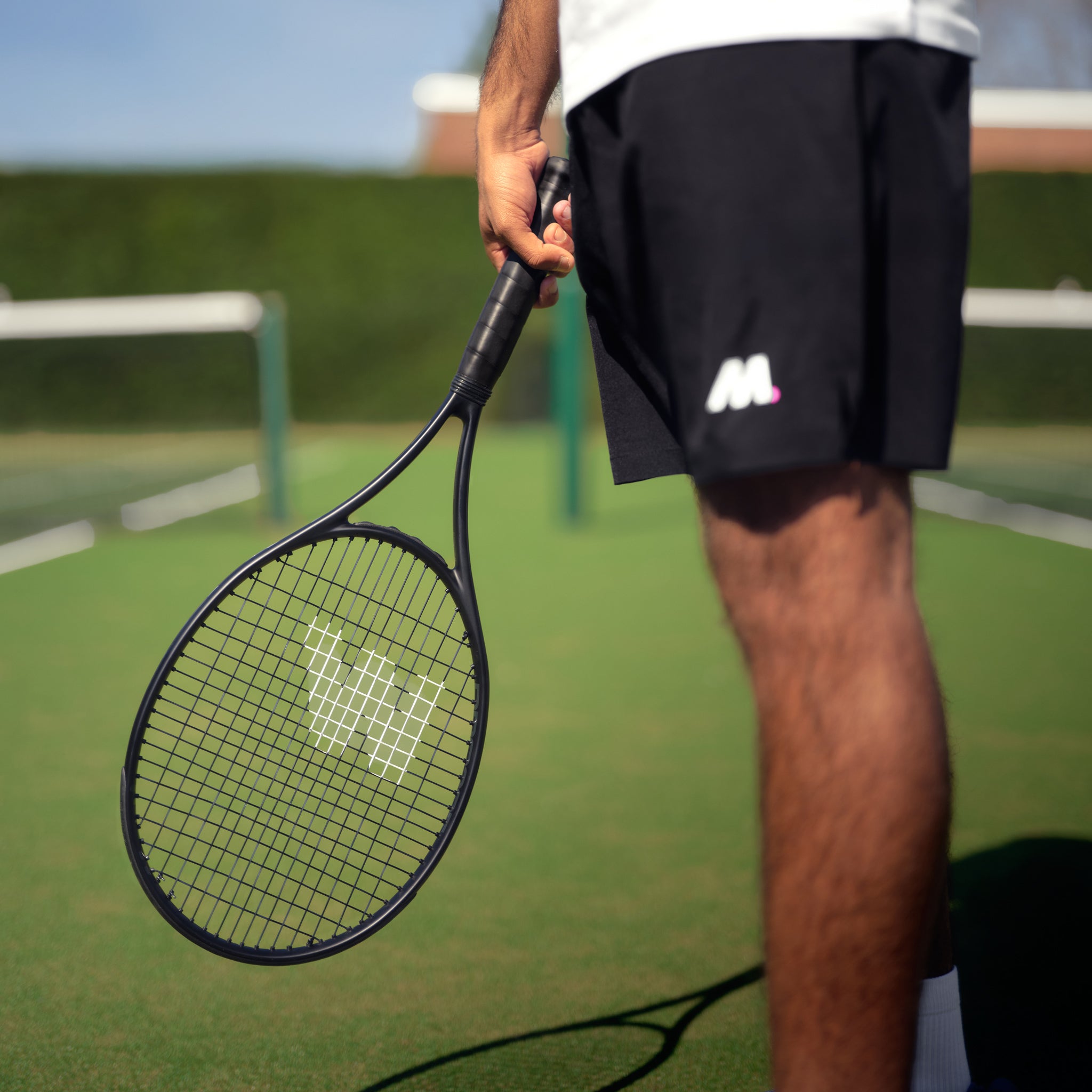






Stepping onto the tennis court for the first time should feel exciting, not overwhelming. Yet walk into any sports shop and you'll face walls of rackets, each promising to transform your game before you've hit your first forehand. The truth? Choosing the best entry level tennis racket isn't about fancy technology or tour-level specifications. It's about finding a frame that lets you learn proper technique whilst building confidence with every stroke. For newcomers to the sport, the right equipment can mean the difference between falling in love with tennis and nursing a sore elbow after three sessions.
Understanding What Makes a Racket Beginner-Friendly
The best entry level tennis racket shares several key characteristics that prioritise comfort and playability over power. Head size matters enormously when you're learning the game. Larger head sizes (between 100 and 110 square inches) create a bigger sweet spot, which means more forgiveness on off-centre hits. This isn't about hiding mistakes but rather allowing new players to experience success early, keeping motivation high during those crucial first months.
Weight distribution plays an equally vital role. Entry-level frames typically weigh between 275g and 295g (unstrung), striking a balance between manoeuvrability and stability. Too light and the racket becomes difficult to control; too heavy and fatigue sets in quickly, potentially leading to tennis elbow and other overuse injuries.
Frame Stiffness and Comfort
Beginners often overlook stiffness ratings, but this specification directly impacts both power generation and joint stress. A moderately flexible frame (around 60-65 on the stiffness index) absorbs more vibration whilst still providing adequate power for players developing their swing mechanics. Stiffer frames might promise more punch, but they also transmit more shock to your arm, wrist, and elbow.
Specifications That Actually Matter
When evaluating potential rackets, focus on these core specifications rather than getting lost in marketing jargon:
| Specification | Ideal Range for Beginners | Why It Matters |
|---|---|---|
| Head Size | 100-110 sq in | Larger sweet spot for forgiveness |
| Weight (Unstrung) | 275-295g | Balance between power and control |
| Balance | Head-Light | Easier manoeuvrability, reduced arm fatigue |
| Length | 27 inches (standard) | Appropriate for adult players learning fundamentals |
| String Pattern | 16x19 (open pattern) | More spin potential, additional power |
The ITF technical guide on racket characteristics provides detailed explanations of how these factors interact. Understanding these relationships helps you make informed choices rather than relying solely on shop assistants' recommendations.
Age and Physical Considerations
Not all entry-level players are adults. Junior players require carefully scaled equipment to develop proper technique from the start. Research consistently demonstrates that scaled rackets promote better movement patterns and skill acquisition in young players.
For junior players, consider:
- 19-inch rackets for ages 2-4
- 21-inch rackets for ages 4-6
- 23-inch rackets for ages 6-8
- 25-inch rackets for ages 8-10
- 26-inch rackets for ages 10-12
Adult beginners, meanwhile, should stick with standard 27-inch frames unless physical limitations suggest otherwise. Women sometimes receive recommendations for lighter, head-heavy rackets, but this often reflects outdated thinking. The best entry level tennis racket for any adult depends on individual strength, fitness level, and playing goals rather than gender alone. Our guide to tennis rackets for women explores these considerations in greater depth.
Common Mistakes When Choosing Your First Racket
Buying based on professional player endorsements. Tour-level frames are designed for athletes who train six hours daily and possess exceptional technique. What works for a Grand Slam champion will likely frustrate a beginner.
Prioritising power over control. Many newcomers assume they need a powerful racket to compensate for developing technique. The opposite proves true; controllable rackets build confidence and encourage proper swing mechanics.
Ignoring grip size. An incorrectly sized grip promotes tension in your forearm and hand, reducing feel and increasing injury risk. Measure from the middle crease of your palm to the tip of your ring finger; this distance (in inches) approximates your ideal grip size.
Skipping professional stringing. Pre-strung rackets from big-box retailers often feature cheap strings at inappropriate tensions. Investing in quality strings like Mantis synthetic string or comfort synthetic options transforms how your racket performs.
The Mantis Approach to Entry-Level Equipment
Mantis designs rackets with the learning curve in mind. The Play 335 series exemplifies what the best entry level tennis racket should deliver: a 105 square inch head, manageable weight, and construction quality that won't fall apart after six months of park court sessions.
Similarly, the Progress 365 range caters to players who've moved beyond absolute beginner status but aren't ready for advanced frames. This illustrates an important point: "entry level" doesn't mean compromising on build quality or materials.
Pairing Your Racket With Appropriate Balls
Your racket choice matters less if you're learning with balls designed for professionals. Lower-compression balls slow down the game, making rally development far easier. The progression from red to orange to green balls mirrors skill development, allowing players to maintain proper technique as ball speed gradually increases.
Beyond the Purchase: Setting Yourself Up for Success
Once you've selected the best entry level tennis racket for your needs, several steps maximise your investment:
- Have it professionally strung at a tension appropriate for beginners (typically 50-55 lbs for synthetic strings)
- Replace the grip if it feels slippery or worn, even on new rackets
- Use a dampener to reduce string vibration if you're sensitive to shock
- Store it properly, avoiding extreme temperatures that can damage the frame or strings
Many beginners also benefit from connecting with the broader tennis community. Resources like Racket Business offer insights into industry trends, equipment reviews, and coaching perspectives that help you understand the sport beyond just hitting balls. It's a useful resource for anyone wanting to deepen their engagement with racket sports culture.
Building Your Game Alongside Better Equipment
The beauty of starting with appropriate entry-level equipment lies in the upgrade path it creates. As your technique improves and you develop preferences for spin, power, or control, you'll naturally gravitate towards more specialised frames. This progression shouldn't happen after two weeks; give yourself at least a full season with your first racket.
When you do advance, you'll have developed the skill to recognise what you actually need rather than what marketing suggests you want. That foundation built on the best entry level tennis racket becomes the launching point for genuine long-term improvement.
| Skill Milestone | Racket Consideration | Typical Timeline |
|---|---|---|
| Consistent contact | Entry-level frame | Months 0-6 |
| Rally capability | Same or slight upgrade | Months 6-12 |
| Spin development | Consider string changes first | Months 12-18 |
| Match play | Evaluate racket feel and preferences | 18+ months |
Your first racket represents more than equipment. It's a commitment to the process of getting better, to showing up on court week after week, and to finding joy in incremental progress. That's the philosophy Mantis was built upon, and it's why choosing thoughtfully matters more than choosing quickly.
Finding the best entry level tennis racket sets the foundation for everything that follows in your tennis journey. Whether you're an adult discovering the sport or a coach equipping the next generation, the right frame balances forgiveness with quality construction. Mantis exists for players who understand that progress, not perfection, defines the sport. Explore the full range of rackets, strings, and equipment crafted for those who show up early, stay late, and find joy in the grind at Mantis.