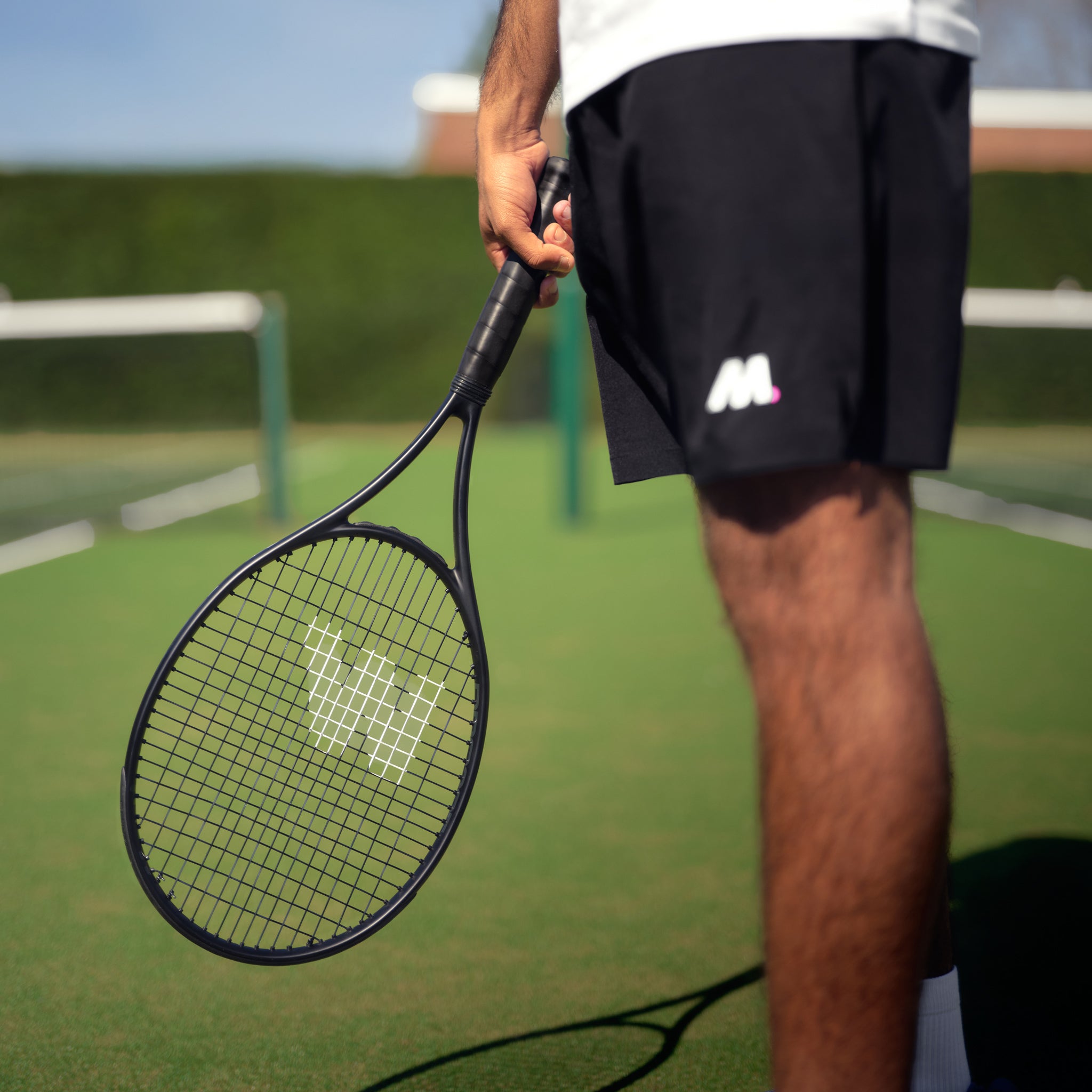






The rise of padel has brought with it an avalanche of equipment choices, and perhaps none is more nuanced than selecting the right racket weight. For players committed to refining their technique and improving match after match, understanding what defines a light padel racket-and whether it suits your playing style-can be the difference between frustration and breakthrough. Weight isn't just a number on a spec sheet; it's the foundation of how your racket feels, responds, and performs when you're three games into a competitive match.
Understanding Weight in Padel Rackets
When we talk about a light padel racket, we're typically referring to models between 340-360 grams. This range sits at the lighter end of the spectrum, though some ultralight options dip below 340 grams.
But here's where it gets interesting: raw weight doesn't tell the whole story. A study measuring the moment of inertia of 137 padel rackets revealed that how a racket feels in real use depends heavily on weight distribution. Two rackets with identical weights can have vastly different maneuverability based on balance point and shape.
The Science Behind Feel
The moment of inertia (MOI) measures resistance to rotation. A light padel racket with weight distributed towards the head might feel heavier during fast volleys than a slightly heavier racket with a head-light balance.
This matters because padel demands rapid changes of direction, quick reactions at the net, and sustained play over lengthy matches. That's why experienced players test rackets in actual playing conditions rather than simply reading specifications.
Materials That Define Lightness
Modern lightweight construction relies on sophisticated material engineering. Understanding padel racket materials reveals how manufacturers achieve reduced weight without sacrificing structural integrity.
| Material Type | Weight Impact | Performance Characteristic |
|---|---|---|
| 12K Carbon Fiber | Very light | Maximum responsiveness, reduced power |
| 18K Carbon Fiber | Light-medium | Balance of control and stability |
| Fiberglass | Medium-heavy | Forgiving, slower response |
| EVA Foam Core | Light | Firmer feel, more control |
| FOAM Soft Core | Medium | Comfort-oriented, shock absorption |
The material matrix of carbon, foam, and surface technologies shows how these components interact. A light padel racket using 12K carbon and EVA foam delivers crisp feedback and exceptional maneuverability, perfect for players who prioritize precision over raw power.
For those interested in racket sports equipment innovation beyond padel, Racket Business offers valuable insights into industry trends and technical developments across tennis, badminton, and padel-a useful resource for understanding how manufacturing techniques evolve across different racket sports.
Who Benefits Most from Lighter Rackets?
Not every player should reach for the lightest option available. Comprehensive weight guidance broken down by player level identifies specific scenarios where lighter rackets excel:
Beginner to Intermediate Players
- Reduced arm fatigue during learning phase
- Easier maneuverability for developing technique
- Lower injury risk whilst building strength
Advanced Players with Specific Styles
- Doubles specialists who prioritize net play
- Defensive players relying on quick reactions
- Anyone with previous arm or shoulder concerns
Players Who Should Think Twice
- Aggressive baseline attackers needing maximum power
- Those with very fast swing speeds (light rackets may feel unstable)
- Players transitioning from tennis who are accustomed to heavier frames
The philosophy at Mantis centers on equipment that serves the relentless improver-the player who values precision over marketing hype. This applies whether you're selecting tennis rackets or exploring padel options.
Performance Trade-offs Worth Considering
Choosing a light padel racket involves understanding what you gain and what you sacrifice. Practical pros and cons of lighter versus heavier rackets reveals these critical considerations:
Advantages of Going Light
- Enhanced maneuverability during rapid exchanges at the net
- Reduced physical strain across three-set matches
- Quicker reaction time on defensive shots
- Better control on touch shots and angled volleys
- Lower injury risk for players with existing joint concerns
Potential Drawbacks
- Less inherent power on overhead smashes
- Requires more active swing technique
- Can feel less stable on off-centre hits
- May lack the "plough-through" effect on hard-hit returns
Think of it this way: a light padel racket is like a precision instrument. It rewards proper technique and punishes lazy strokes. For the committed player willing to refine their mechanics, that's not a drawback-it's a feature.
Fine-Tuning Your Setup
Even after selecting your base racket weight, customization plays a crucial role. Small additions make surprisingly large differences:
- Overgrip: Adds 5-8 grams
- Frame protection tape: Adds 3-5 grams
- Lead tape at 3 and 9 o'clock: Adds stability without affecting swing weight dramatically
- Lead tape at 12 o'clock: Increases power but raises MOI significantly
Many serious players start with a lighter frame and add small amounts of weight strategically. This approach offers flexibility that heavy rackets cannot match-you can always add weight, but removing it isn't practical.
The same principle applies across racket sports. Whether you're examining coaching equipment or tennis strings, understanding how components interact separates recreational players from devoted improvers.
Testing Before Committing
Here's uncomfortable truth: you cannot know if a light padel racket suits you without extensive court time. Specifications only tell part of the story.
Effective testing protocol:
- Play at least three full matches (not just warm-up sessions)
- Test in varying conditions (fresh, fatigued, different opponents)
- Note specific scenarios: Does your arm tire late in matches? Do smashes feel weak? Is net play easier?
- Compare directly with your current racket during the same session
Many retailers offer demo programmes precisely because experienced players understand this necessity. The investment of time yields clarity that no amount of research can replace.
Weight as Part of Your Larger Game
Racket selection never exists in isolation. Your choice of a light padel racket should align with your physical attributes, playing style, technical development goals, and even your choice of balls.
A lighter racket pairs beautifully with aggressive footwork and net-oriented tactics. It complements players who generate pace through technique rather than muscular force. For those grinding through improvement, session after session, the reduced fatigue factor cannot be overstated.
This mirrors the broader Mantis approach to equipment: serving those who find meaning in the process itself, not just the outcome. Whether that's late-night training with quality balls or refining technique with properly matched gear, the equipment should support relentless progress.
A light padel racket offers distinct advantages for maneuverability, comfort, and precision-but only when matched thoughtfully to your playing style and physical needs. For players committed to the grind of genuine improvement, equipment choices matter precisely because they either support or hinder the work you're putting in. Mantis exists for those who understand this distinction, crafting precision-engineered gear that rewards dedication over shortcuts.