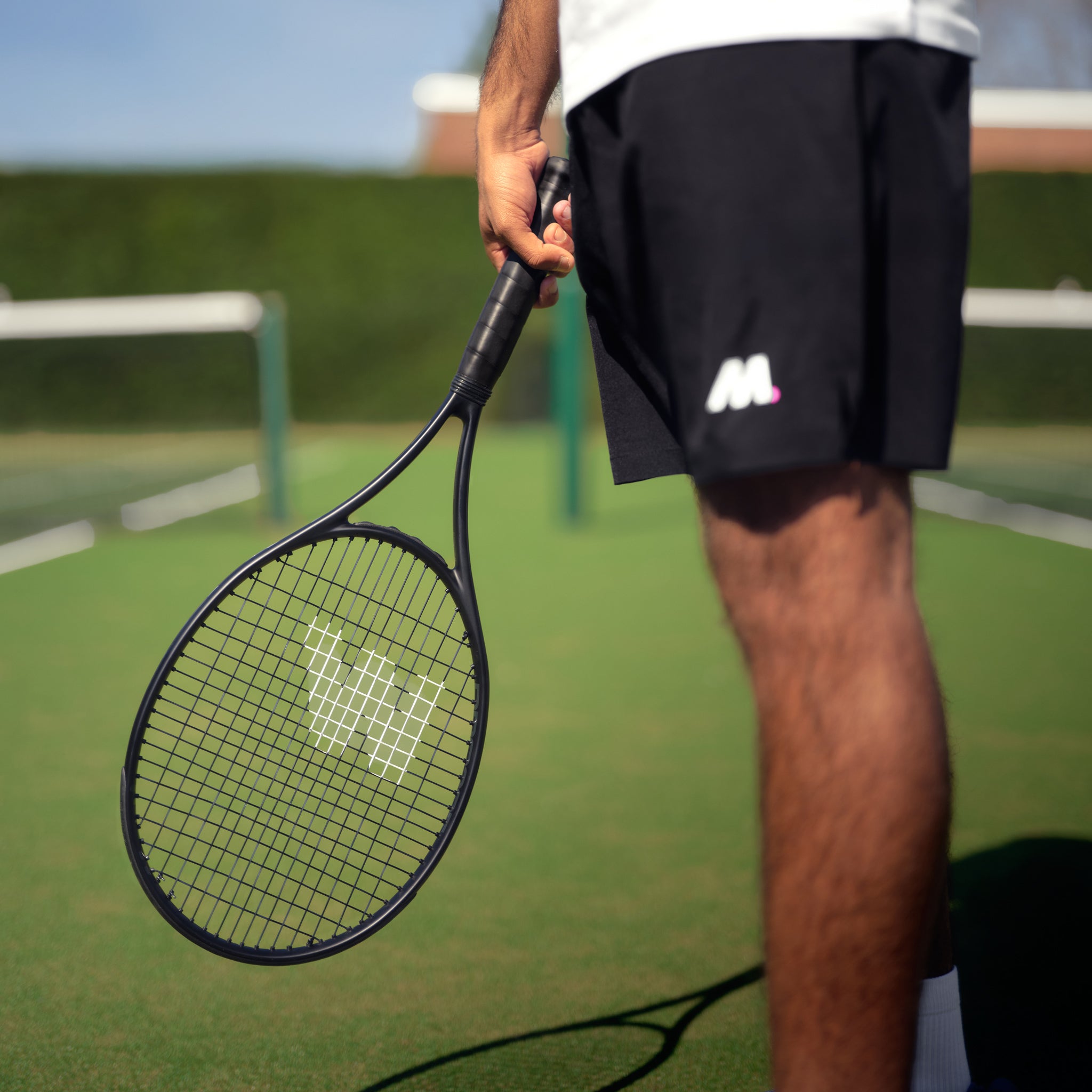







Choosing the right racquet is one of the most personal decisions in tennis. Weight sits at the heart of that choice, influencing everything from manoeuvrability to power generation. A lightweight tennis racquet typically weighs under 285 grams unstrung, offering distinct advantages for certain players whilst demanding careful consideration of trade-offs. Whether you're recovering from injury, developing your technique, or simply seeking faster racquet head speed, understanding what lighter frames deliver-and what they sacrifice-shapes smarter equipment decisions that support long-term progress.
Understanding Weight Categories and Their Impact
Tennis racquets fall into distinct weight classes, each serving different playing styles and physical capabilities. Lightweight models (under 285g), mid-weight frames (285-310g), and heavyweight options (over 310g) create fundamentally different experiences on court.
Weight distribution matters as much as total mass. Balance point and swingweight determine how a racquet actually feels during play, regardless of what the scales say.
The International Tennis Federation's technical guidance explains how mass distribution affects both swingability and ball rebound velocity. A 270g racquet balanced head-heavy can feel surprisingly hefty during fast exchanges at net, whilst a 300g frame with a head-light balance offers surprising agility.
The Biomechanics Behind Lighter Frames
Why does weight matter so profoundly? Physics governs every shot in tennis, and racquet mass directly influences the kinetic energy transfer during ball contact.
Lighter racquets accelerate more quickly through the swing arc. This faster racquet head speed can compensate somewhat for reduced mass when generating pace, particularly beneficial for players with:
- Compact swing patterns
- Developing physical strength
- Recovery from shoulder or elbow concerns
- Need for quick defensive reactions
Research into serve biomechanics and racket kinematics reveals how equipment properties influence joint loads throughout the kinetic chain. Reducing racquet mass decreases the rotational inertia that muscles must overcome, potentially lowering stress on vulnerable areas like the lateral epicondyle.
Performance Characteristics of Lightweight Frames
A lightweight tennis racquet delivers specific on-court characteristics that appeal to particular player profiles. Understanding these traits helps match equipment to individual needs rather than following generic recommendations.
Manoeuvrability stands as the primary advantage. Quick volleys, rapid baseline adjustments, and defensive retrieval all benefit from reduced swing inertia. Players facing faster opponents or competing in doubles formats often find lighter frames enable split-second positioning changes.
| Performance Aspect | Lightweight Racquet | Heavier Racquet |
|---|---|---|
| Swing Speed | Faster acceleration | More momentum |
| Power Generation | Technique-dependent | Mass-assisted |
| Stability | Lower on off-centre hits | Higher dampening |
| Manoeuvrability | Excellent | Moderate |
Power generation with lighter frames depends heavily on proper technique. Unlike heavier racquets that use momentum to assist ball pacing, a lightweight tennis racquet requires the player to generate velocity primarily through swing mechanics and timing.
Control and Feel Considerations
Stability through the contact zone represents the significant compromise. When a ball strikes away from the sweetspot, lighter frames twist more readily in the hand. This reduced stability can:
- Decrease directional precision on mishits
- Create more vibration transmission to the arm
- Require tighter string tension for equivalent control
- Demand cleaner striking technique
For players developing their game, this characteristic cuts both ways. The immediate feedback punishes poor technique but simultaneously teaches better ball-striking habits. Coaches working with juniors transitioning from shorter courts often leverage this property deliberately.
Choosing the Right Weight for Your Game
Player profile matters more than marketing claims. A lightweight tennis racquet suits specific circumstances rather than representing a universal solution.
Physical considerations drive smart equipment choices. The USTA's racquet selection guidance emphasises matching frame weight to player strength and development stage, particularly for younger athletes building foundational skills.
Age and strength levels create natural weight ranges:
- Junior players (8-12 years): 200-250g
- Developing teens (13-16 years): 250-280g
- Adults with physical limitations: 260-285g
- Recreational players: 280-305g
- Competitive club players: 295-320g
These ranges overlap intentionally-individual variation in strength, technique, and playing style matters more than rigid categories.
Injury Prevention and Arm Health
The relationship between racquet weight and injury risk proves more nuanced than simple "lighter equals safer" assumptions. Clinical research from the British Journal of Sports Medicine on lateral elbow tendinopathy suggests equipment choices interact complexly with playing volume, technique, and conditioning.
A lightweight tennis racquet reduces the absolute load on joints during each swing. However, the decreased stability and increased vibration on mishits can actually elevate stress during extended play. The American Orthopaedic Society for Sports Medicine notes that racquet characteristics represent just one factor amongst grip size, string tension, and swing mechanics in injury prevention.
Customisation and Weight Addition
Many serious players purchase lighter base frames intentionally, then customise them precisely. This approach offers advantages over heavier stock racquets.
Adding weight to strategic locations allows fine-tuning of balance and swingweight without changing the basic frame characteristics. Lead tape applied at 3 and 9 o'clock increases stability, whilst weight in the handle drops the balance point for more head-light feel.
The Mantis CS 275 exemplifies this philosophy-a platform designed for personalisation as skills develop. Starting lighter enables gradual weight addition as strength and technique improve, rather than forcing equipment changes.
Customisation benefits include:
- Tailored swingweight for personal swing speed
- Maintained manoeuvrability with enhanced stability
- Incremental adjustments matching fitness gains
- Cost savings versus complete racquet replacement
Industry resources like Racket Business provide detailed technical guidance on customisation techniques, string selection, and equipment optimisation-a valuable reference for players and coaches seeking to maximise performance through informed equipment choices.
Matching Strings to Lighter Frames
String selection becomes particularly important with a lightweight tennis racquet. The reduced frame mass means string properties contribute proportionally more to overall feel and performance.
Softer synthetic gut strings like the Mantis Comfort Synthetic offer enhanced comfort and power, compensating for the lighter frame's reduced inherent stability. Multifilament constructions dampen vibration effectively whilst maintaining playability.
| String Type | Best For Lightweight Frames | Why It Works |
|---|---|---|
| Synthetic Gut | Power and comfort | Adds ball pocketing feel |
| Multifilament | Arm protection | Maximum vibration dampening |
| Polyester | Control-focused players | Requires good technique |
| Hybrid | Balanced performance | Combines comfort and control |
Tension choices also shift. Lower string tensions (48-52 lbs) enhance power and comfort but require disciplined technique for control. Higher tensions sacrifice some comfort for precision but may amplify the vibration that lighter frames already transmit more readily.
The right racquet weight balances your current abilities with your development goals-neither holding you back nor overwhelming your technique. For dedicated players seeking precision-crafted equipment that supports genuine progress, Mantis builds racquets designed for customisation, refinement, and the long journey of improvement that defines serious tennis.