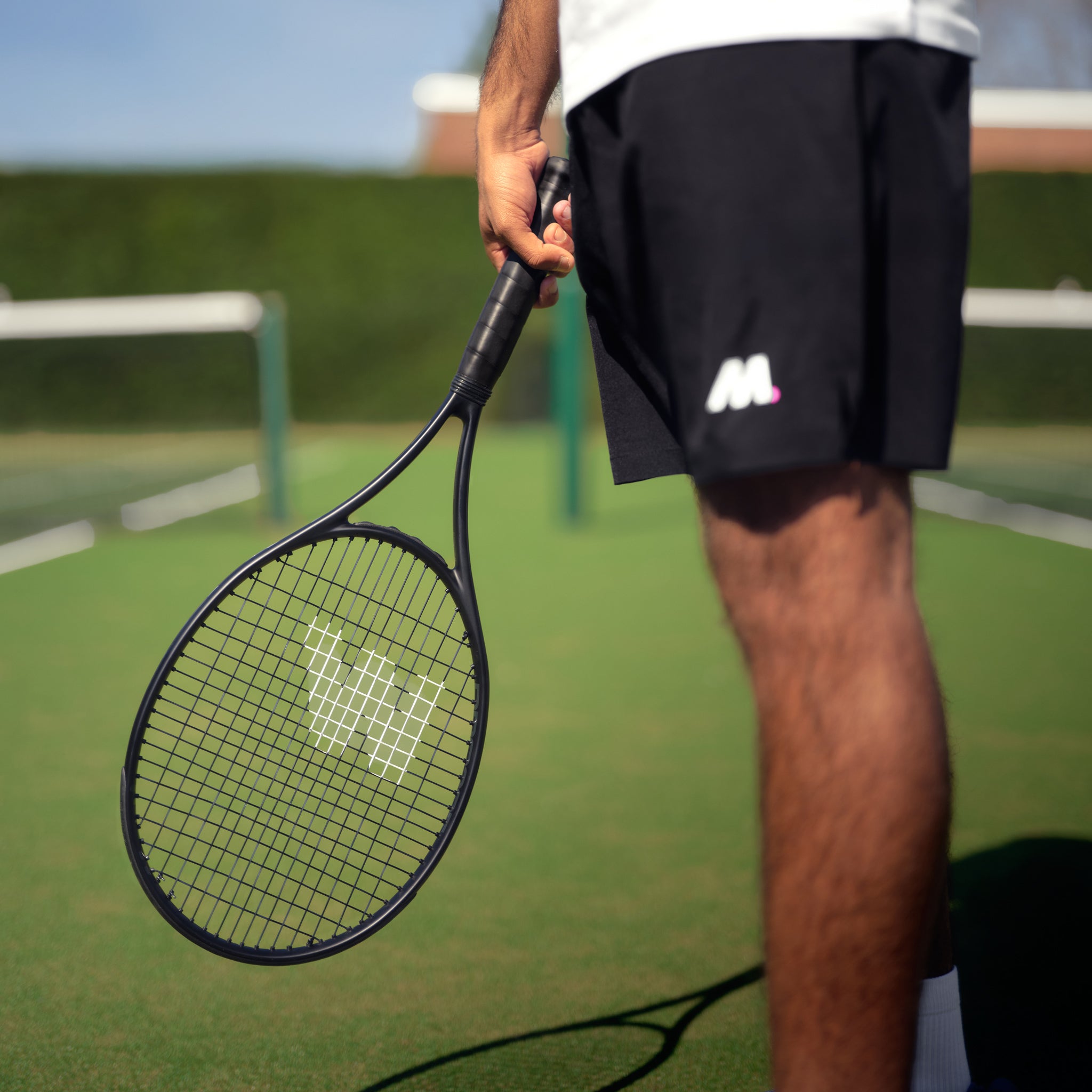







You arrive at the club with the same racket, the same shots and the same opponent as last week. Yet everything feels different. Your forehand lands short, the ball stays low and hitting a winner seems much harder.
On another day, shots you normally trust keep sailing beyond the baseline.
Conditions can change how tennis feels. Understanding a little about them helps you make better decisions, without rebuilding your technique every time the forecast changes.
At Mantis, we believe progress comes from paying attention to the details. Here are some practical ways to adapt your game.
Start by watching the ball
Before deciding that your timing has disappeared, use the warm-up to notice three things: how high the ball bounces, how deep your normal rally shot lands and how comfortably you can reach your usual contact point.
Hit a few controlled groundstrokes, practise volleys and serve from both ends. Start with your normal swing rather than immediately trying to compensate.
Your job is to establish what works today. If several comfortable shots land short, make a small adjustment and check the result. One mishit tells you very little; a repeated pattern gives you something useful.
Cold days call for patience
Cold air is denser than warm air, creating more resistance as the ball travels. Temperature also affects the ball itself: tennis balls generally bounce lower when cold than when warm.
That can make winter tennis feel less lively. A shot that normally pushes your opponent back may sit comfortably within reach.
Start by adjusting your feet. If the bounce stays low, bend your knees and get into position early rather than reaching down at the last moment.
If your opponent’s shots consistently land shorter, try moving slightly forwards. Keep enough space to deal with their deeper balls.
Aim for useful depth with a smooth, committed swing. When that does not create an opening, work your opponent around the court. Changing direction or finding an angle can be more productive than repeatedly trying to hit harder.
Warm days need control
In warmer conditions, the ball may bounce higher and your usual shots may travel deeper. The practical response is to give yourself more room for error.
Bring your targets inside the lines and begin rallies at a pace you can repeat. Keep your swing flowing, but avoid adding power before you have found your range.
If the bounce pushes your contact point too high, choose your position deliberately. You might move back to let the ball drop, or step in and take it earlier if that is a shot you already practise.
For serves, test placement before chasing speed. A reliable serve to your opponent’s weaker side can start the point more effectively than a harder delivery you cannot consistently land.
Humidity does not mean heavier air
Humid weather is often blamed for slow tennis, but there is a surprising detail: at the same temperature and pressure, humid air is slightly less dense than dry air. Its direct effect on ball flight is usually small.
That does not make your experience imaginary. A muggy evening can still feel demanding, and several things may be changing together.
Separate what you observe. Are you arriving late to the ball? Is the bounce lower? Are the balls actually wet? Each points towards a different adjustment.
If your grip becomes slippery, keep a towel nearby and replace a worn overgrip. Between points, use a simple routine: settle, choose your target and prepare. Getting frustrated with the weather rarely helps you read the next ball.
Damp courts require a fresh assessment
Humid air and a rain-soaked tennis ball are different things. Likewise, a damp court will not necessarily behave like a dry court.
Check the surface before starting and follow your club’s guidance about whether it is playable. If your footing feels insecure, stop.
Where play is suitable, watch the bounce rather than assuming every surface reacts alike. Keep your preparation early and take small adjustment steps as the ball approaches.
Use balls in a similar condition throughout the session. Switching between dry, fresh balls and wet, heavily used ones makes judging your shots harder.
You may need simpler patterns and bigger targets. A difficult evening is still a useful chance to practise balance, positioning and keeping the ball in play.
Wind rewards clear decisions
On an exposed club court, wind can be the most obvious challenge.
With the wind behind you, start with more space inside the baseline as your target. Into the wind, check whether your normal shot is falling short before adjusting your depth.
In a crosswind, leave extra room away from the sideline the ball is being pushed towards. Avoid changing everything at once; make one adjustment and see whether it works.
On serve, use a comfortable, repeatable toss and be ready to catch one that drifts out of position. You do not have to rescue a poor toss.
After changing ends, reassess. The shot that worked in the previous game may need a different target now.
Playing somewhere higher
If you play on holiday at significant altitude, thinner air can make familiar shots travel further. Spin also behaves differently, so relying on your usual topspin to bring every ball down can catch you out.
Allow yourself an extra practice session if possible. Begin with generous targets and ask the local club which balls it uses; specialist high-altitude balls are available.
For most regular club matches, simply observing the flight and bounce matters more than knowing the venue’s elevation.
Make one change you can trust
You do not need a different racket for every forecast. Start with familiar equipment, balls in good condition and a willingness to adapt.
Choose one clear instruction: move forwards, give the baseline more room, prepare earlier or build the point patiently.
Afterwards, remember what helped. That knowledge becomes part of your game, ready for the next cold league fixture or breezy doubles evening.
Conditions will keep changing. Learning to respond is another way to improve.
Whatever the forecast, head onto court with equipment you trust. Explore Mantis tennis balls for your next club match, find a racket that suits your game and keep a fresh overgrip in your bag for when your hands need a little extra help. We put thought into the details so you can focus on enjoying your tennis and improving with every session. Explore the Mantis range.
Play is Progress.
For a wider look at the equipment, clubs and ideas shaping the game we play, explore RacketBusiness.com.