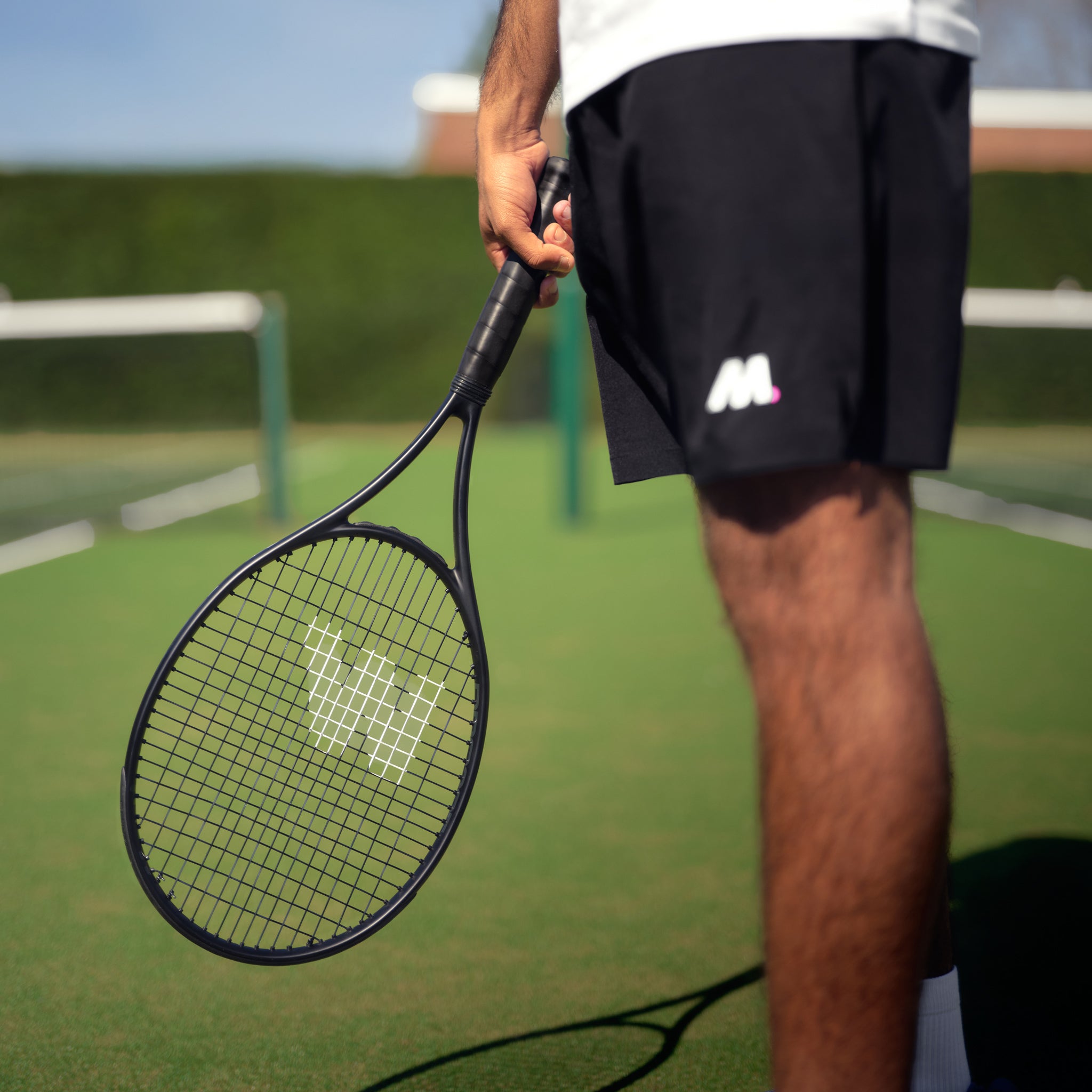






The death grip. We've all been there-strangling the racket handle as though it might leap from our hands mid-swing. Over gripping a tennis racket is one of the most common technical flaws on court, yet it's also one of the least discussed. For the dedicated amateur, the club coach, and anyone grinding through late-night training sessions, understanding grip pressure isn't just about comfort. It's about unlocking fluidity, preventing injury, and sustaining a lifelong pursuit of progress.
Why Players Strangle Their Rackets
Tension breeds tension. When you're nervous about a big point or concentrating intensely on technique, your hand instinctively clamps down. This white-knuckle approach feels secure, but it creates a chain reaction of stiffness up the forearm, through the elbow, and into the shoulder.
Common triggers for excessive grip pressure include:
- Match anxiety and performance nerves
- Trying to generate more power through force
- Compensating for an incorrect grip size
- Fear of the racket twisting on impact
- Learned habits from early coaching
Over gripping a tennis racket fundamentally changes how energy transfers through the kinetic chain. Instead of allowing the wrist to snap naturally and the arm to whip through the ball, you're essentially locking the mechanism. Think of it like trying to crack a whip whilst holding it rigid-physics simply won't cooperate.
The Biomechanics Behind Grip Pressure
Research into force production across different forehand grip styles demonstrates that grip pressure directly influences shot velocity and control. When players grip too tightly, they reduce the racket head's ability to accelerate independently, forcing compensatory movements elsewhere in the body.
The ideal grip pressure sits somewhere around 4-5 on a scale of 10. Firm enough to control the racket through contact, relaxed enough to allow natural wrist action and shock absorption. Most recreational players operate at 7-8 or higher-particularly on big shots.
The Injury Cascade: From Hand to Elbow
The NHS identifies repetitive gripping as a primary contributor to lateral epicondylitis-tennis elbow. When you're constantly over gripping a tennis racket, the extensor muscles in your forearm work overtime to maintain that tension, creating micro-tears in the tendon attachment at the elbow.
| Injury | Primary Cause | Prevention Strategy |
|---|---|---|
| Tennis Elbow | Sustained forearm tension | Lighter grip pressure, proper technique |
| Wrist Strain | Locked wrist position | Dynamic wrist movement, relaxed hold |
| Shoulder Fatigue | Compensatory mechanics | Full kinetic chain engagement |
Between points, consciously relax your hand. Wiggle your fingers. Let the racket rest in your palm rather than squeezing continuously. These micro-breaks reduce cumulative tendon stress and give your nervous system permission to reset.
How Grip Choice Affects Your Hold
Not all grips are created equal. The material and thickness of your handle covering significantly influence how hard you need to squeeze. Choosing between synthetic and leather grips affects both feel and security-synthetic overgrips offer more tack, whilst leather provides a firmer, more traditional surface.
If you find yourself constantly battling slippage, you're likely gripping harder than necessary. Consider:
- Replacing worn overgrips regularly (every 10-15 hours of play)
- Experimenting with tackier grip materials to reduce required pressure
- Checking whether your racket grip size is correct for your hand
A grip that's too small forces you to squeeze harder to prevent twisting. Too large, and you can't wrap your fingers properly, creating instability. The Chartered Society of Physiotherapy notes that modifying grip size or using a thicker handle reduces tendon load-practical advice for anyone experiencing elbow discomfort.
Pressure Mapping and Handle Dynamics
Fascinating research using pressure-mapping technology reveals that grip pressure isn't uniform across the hand. Most players apply excessive force with the top three fingers whilst barely engaging the bottom two. This imbalanced distribution contributes to both over gripping a tennis racket and poor shot consistency.
The solution? Focus on the last two fingers-the ring and pinky-to create stability, whilst keeping the index finger and thumb relatively relaxed. This "power finger" approach, common in Eastern martial arts, translates beautifully to racket sports.
Training Your Brain to Release Tension
Changing grip pressure isn't just physical-it's neurological. Your brain has learned that tight equals secure, and reprogramming that association takes deliberate practice.
Effective drills for developing relaxed grip pressure:
- The drop test: After each groundstroke, completely release your grip and catch the racket before it falls. This trains rapid tension cycling.
- Foam ball feeding: Hit with children's foam balls, which require minimal force. Your brain learns that power comes from technique, not squeeze.
- Timed relaxation: Between every point, shake out your hitting hand for five full seconds. Make it ritual.
- Grip pressure check-ins: Before serving, rate your grip on a mental 1-10 scale. Aim for 4.
Coaches working with juniors and intermediates should emphasise feel over force. When players chase power through muscular effort rather than efficient mechanics, over gripping a tennis racket becomes an inevitable consequence.
Integrating Strength Work and Recovery
Progressive loading programmes help build forearm resilience without promoting excessive gripping. Tennis-specific strength training should include eccentric wrist exercises, finger extensor work, and grip endurance drills that teach your hand to maintain moderate pressure over extended rallies.
The OPTimisE trial demonstrated that optimised physiotherapy-including education about grip modification and progressive loading-significantly improved outcomes for lateral elbow tendinopathy. For players already experiencing symptoms, this evidence-based approach offers a roadmap back to pain-free tennis.
Recovery matters as much as training. Consider:
- Active rest days to prevent cumulative strain
- Self-massage of forearm muscles post-session
- Ice therapy for acute inflammation
- Professional assessment if pain persists beyond two weeks
The String Tension Connection
Here's something many players miss: your racket's string tension directly affects how hard you grip. Lower tensions create a larger sweet spot and more dwell time, reducing the shock transmitted to your hand. Higher tensions demand more precise contact and often trigger compensatory gripping.
If you're consistently over gripping a tennis racket, dropping your tension by 2-3 pounds might feel counterintuitive, but it often improves both comfort and control. The racket does more of the work; you simply guide it.
Pairing the right string with appropriate tension maximises this effect. Strings designed for spin generation can add bite without requiring you to muscle the ball, further reducing the temptation to squeeze harder.
Building Long-Term Habits
Sustainable improvement happens through consistent, mindful repetition. Every training session is an opportunity to reinforce relaxed grip pressure or entrench bad habits deeper. Choose deliberately.
For those serious about progress, tracking grip awareness in a training journal reveals patterns. Note when tension creeps in-first serves? Defensive slices? High backhand volleys?-and target those situations with specific drills.
The tennis community thrives on shared knowledge and continuous learning. For coaches, club managers, and obsessed amateurs looking to deepen their understanding of technique, equipment, and the business of racket sports, Racket Business offers invaluable industry insights, coaching resources, and equipment analysis that complement on-court development.
Releasing your grip-both literally and metaphorically-unlocks a more fluid, sustainable game. By understanding the biomechanics, addressing equipment factors, and training deliberate relaxation, you transform tension into controlled power. At Mantis, we craft precision rackets for players who find beauty in the grind and understand that progress is built through thousands of mindful repetitions. Every detail matters when tennis isn't just a game-it's a lifelong pursuit of getting better.