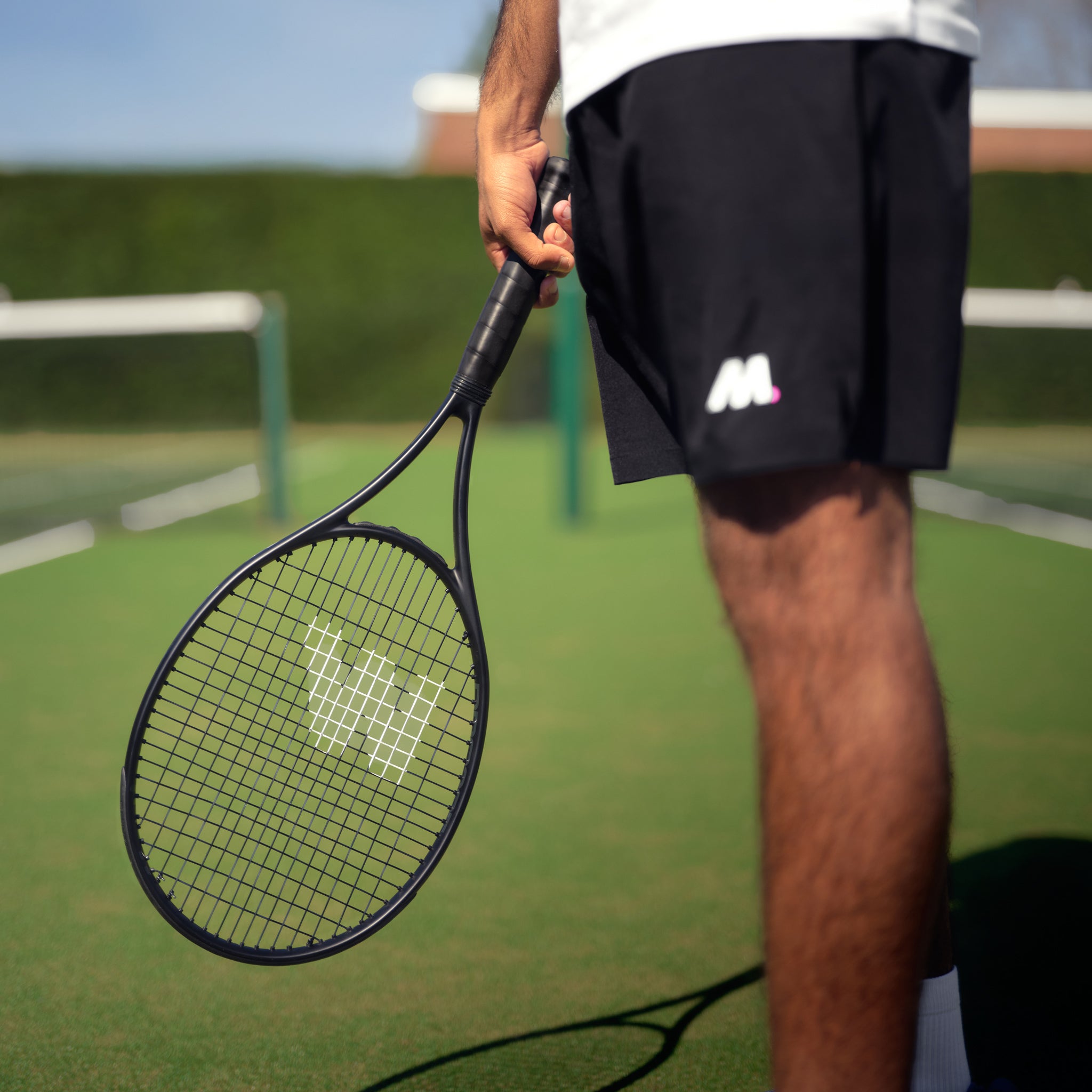






The difference between a winner down the line and a ball sailing long can come down to a few pounds of pressure. For players committed to improvement, understanding tennis string tension isn't just technical knowledge-it's a pathway to unlocking better feel, more consistent groundstrokes, and ultimately, a deeper connection with your racket. Whether you're a club coach stringing rackets for your squad or an amateur fine-tuning your setup, getting this right matters more than you might think.
Why Tennis String Tension Deserves Your Attention
Most players spend hours analysing their technique, yet overlook one of the most adjustable elements in their equipment arsenal. Tennis string tension directly influences how your racket responds to every shot, from delicate drop volleys to powerful baseline drives.
The physics are straightforward but profound. Lower tension creates a trampoline effect, allowing strings to deflect more on impact and generate additional power. Higher tension tightens the string bed, reducing deflection and offering enhanced control for players who generate their own pace.
Here's what changes across the tension spectrum:
- Power generation: Lower tensions (48-54 lbs) provide more natural power
- Control precision: Higher tensions (56-62 lbs) offer greater shot placement accuracy
- Comfort levels: Looser strings absorb more shock, reducing arm stress
- Spin potential: Mid-range tensions often optimise string movement for bite
The fundamental relationship between tension and performance reveals that there's no universal "correct" setting-only what works for your individual game.
Finding Your Starting Point
Most recreational players benefit from beginning in the middle of their racket's recommended range. Check the throat of your frame-manufacturers typically list a tension window between 50 and 60 pounds for modern rackets.
Starting at the midpoint gives you room to experiment in both directions. Drop five pounds if you're struggling to generate depth or experiencing arm discomfort. Increase tension if balls are flying beyond your target zone despite clean technique.
| Player Type | Recommended Starting Tension | Primary Benefit |
|---|---|---|
| Beginners | 50-54 lbs | Maximum power, arm comfort |
| Intermediate | 54-58 lbs | Balance of power and control |
| Advanced | 58-62 lbs | Precision control, spin access |
The Material Factor You Can't Ignore
String composition interacts dramatically with tension choices. Natural gut maintains playability across a broader tension range than polyester, which becomes rigid and harsh when strung tight.
Synthetic gut and multifilament strings work brilliantly at lower tensions, delivering comfort without sacrificing too much control. Polyester strings, favoured by aggressive baseliners, often perform best when strung 5-10 pounds lower than synthetic alternatives due to their inherent stiffness.
Consider these material-specific approaches:
- Natural gut: Start at manufacturer recommendations-this premium material excels anywhere in the range
- Multifilament: Drop 2-3 pounds below midpoint for optimal comfort and power
- Polyester: String 10-15% lower than synthetic gut to maintain playability
- Hybrid setups: Balance mains and crosses with different tensions for customised feel
The comprehensive advice on string and tension selection emphasises matching your string choice with appropriate tension for injury prevention and performance optimisation.
For those exploring different string options, the Mantis string collection offers various materials engineered for specific playing styles and tension preferences.
How Tension Affects Your On-Court Performance
Walk onto court with strings at 48 pounds versus 58 pounds, and you're essentially playing with two different rackets. The lower tension creates a larger sweet spot and more forgiving contact, perfect for developing players still refining their stroke mechanics.
Higher tension demands precision. The tighter string bed responds crisply to clean strikes but punishes mishits with harsh vibration and reduced power. Advanced players appreciate this feedback-it reinforces proper technique and rewards consistency.
Spin generation sits in an interesting middle ground. Extremely tight strings limit string movement, reducing snapback and bite. Very loose strings can't grip the ball effectively. The sweet spot for spin typically falls in the 52-56 pound range for most modern polyester strings.
The Timing Question Everyone Asks
Even perfectly selected tennis string tension deteriorates over time. Strings lose tension immediately after stringing-polyester can drop 10% within the first 24 hours. This tension creep continues throughout the string's life, fundamentally altering performance characteristics.
A good rule: restring as many times per year as you play per week. Playing three times weekly? Aim for three restrings annually at minimum. Competitive players and coaches working with serious juniors should consider more frequent maintenance.
Signs your strings need attention include notching where strings cross, visible fraying, or a "dead" feel when striking balls. Don't wait for breakage-performance degradation happens long before strings snap.
Customising Tension for Your Game Style
Aggressive baseliners who take big cuts at the ball typically prefer firmer string beds in the 55-60 pound range. This setup provides the control necessary for containing heavy topspin whilst maintaining enough feel for touch shots.
All-court players benefit from moderate tensions around 54-57 pounds, balancing baseline consistency with net play responsiveness. The detailed guidance on racket specifications explains how tension works alongside head size and weight distribution.
Serve-and-volley players might experiment with slightly lower tensions for enhanced touch and comfort during extended net exchanges. The extra dwell time helps with delicate volleys and angled shots.
Match your game profile:
- Hard hitters: Higher tension (56-60 lbs) to tame power
- Touch players: Lower tension (50-54 lbs) for feel and control
- Spin specialists: Mid-range (53-57 lbs) for optimal snapback
- Comfort seekers: Lower end of recommended range
The practical tension selection process reinforces that personal preference ultimately trumps general guidelines.
Testing and Adjusting Your Setup
Smart players approach tension as an ongoing experiment rather than a one-time decision. Make small adjustments-two pounds at a time-and play multiple sessions before drawing conclusions. Your arm needs time to adapt to new string bed characteristics.
Keep notes on how different tensions affect your game. Does 54 pounds give you better depth on slice backhands? Does 58 pounds improve your serve placement? These insights build a personalised database of what works for your unique biomechanics and technique.
Weather influences tension effects significantly. Hot conditions make strings play softer, effectively reducing tension. Cold weather creates the opposite effect, making the same string bed feel firmer and less responsive.
For business owners and coaches seeking deeper industry insights and networking opportunities, Racket Business provides valuable resources on equipment trends, retail strategies, and connecting with other professionals in the racket sports industry.
When selecting adult tennis rackets for your arsenal, consider how frame stiffness and construction interact with your preferred string tension to create the complete package.
The Professional Perspective
Tour players obsess over minute tension differences, sometimes requesting half-pound adjustments between rackets. Whilst recreational players don't need such precision, the principle holds: small changes create noticeable differences for those paying attention.
Many professionals string their rackets fresh for each match, ensuring consistent tension and performance. Club players can't match that frequency, but understanding the underlying principle-tension matters-helps optimise your maintenance schedule.
Advanced players might explore different tensions for practice versus matches, using slightly lower tension for training volume to reduce arm stress whilst reserving higher tensions for competition when control takes priority.
Mastering tennis string tension transforms your racket from generic equipment into a precision tool matched to your game. The journey of experimentation-testing different tensions, observing results, making adjustments-embodies the relentless pursuit of improvement that defines serious players. At Mantis, we craft rackets and strings for those who understand that excellence emerges from attention to details others overlook, supporting your progress every step of the way.