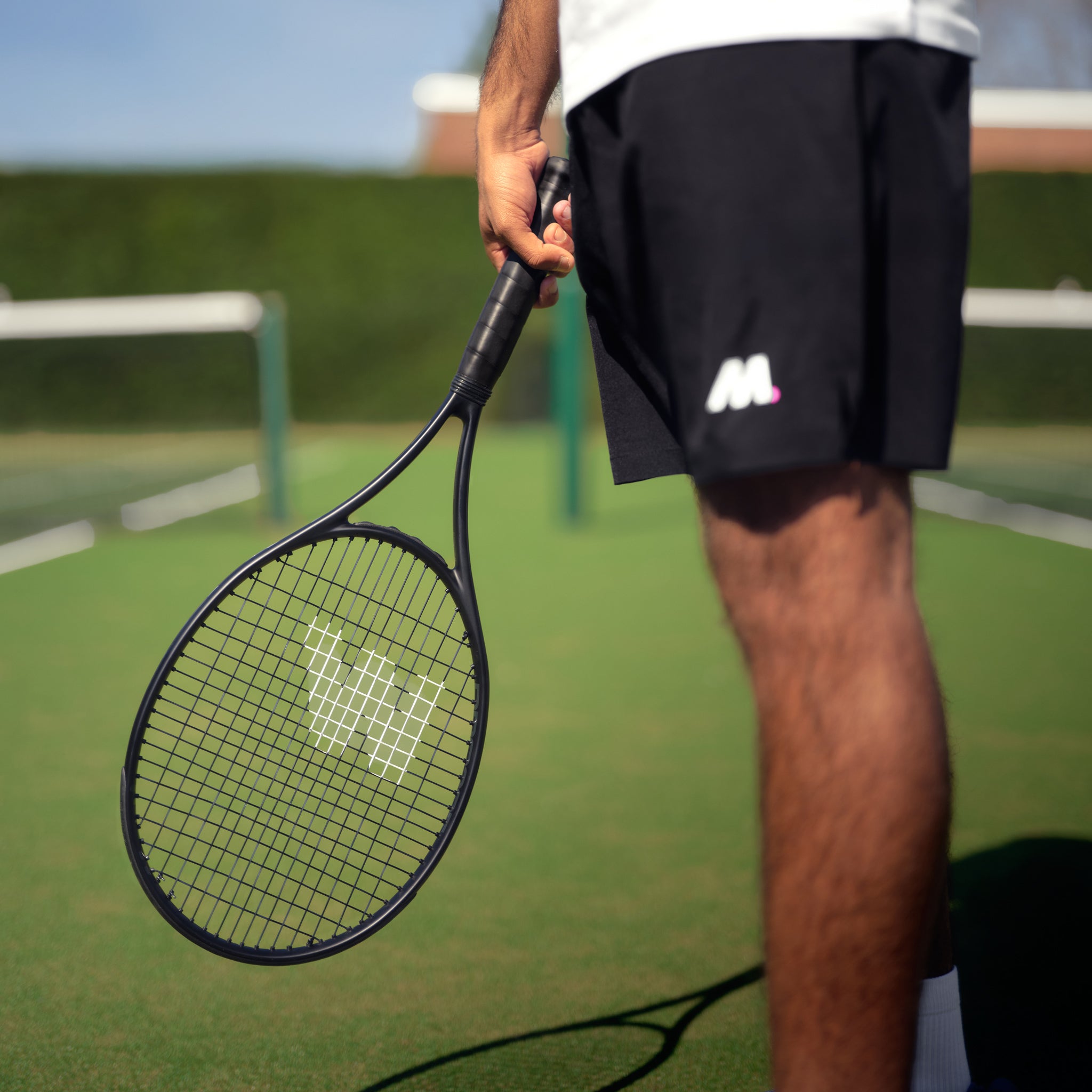






Choosing between a heavy or light tennis racket represents one of the most significant decisions in your tennis journey. The weight of your racket influences everything from power generation to arm fatigue, yet the answer isn't as straightforward as simply picking the heaviest or lightest option. For those who show up early and stay late, perfecting their craft on park courts and club facilities, understanding racket weight becomes fundamental to sustained improvement and injury prevention.
Understanding Tennis Racket Weight Categories
The conversation around heavy or light tennis rackets begins with understanding what these terms actually mean in practical measurements. Tennis rackets typically range from 250 grams to 340 grams when unstrung, though custom specifications can push these boundaries further.
Modern weight classifications include:
- Ultra-light: 250-265 grams (ideal for juniors and beginners)
- Light: 265-285 grams (versatile for intermediate players)
- Medium: 285-310 grams (balanced performance option)
- Heavy: 310+ grams (preferred by advanced players)
The weight you feel during play, however, differs from static weight due to factors like balance point and swingweight.
Static Weight vs Swingweight
Static weight represents what you'd measure on a scale, whilst swingweight indicates how heavy the racket feels during your swing motion. A racket might weigh 300 grams statically but feel considerably heavier when swinging due to its balance point. Head-heavy rackets generate more swingweight, creating powerful shots but demanding greater physical effort.
The Case for Lighter Rackets
Lighter rackets offer distinct advantages that shouldn't be dismissed, particularly for players building their technique or managing physical limitations. These frames typically weigh under 285 grams and provide exceptional manoeuvrability.
Benefits include:
- Reduced arm fatigue during extended training sessions
- Faster swing speeds for generating pace
- Enhanced manoeuvrability at the net
- Lower injury risk for developing players
Many club coaches recommend lighter frames for their students precisely because they enable proper technique development without overwhelming the arm. When you're grinding through late-night training sessions, a lighter racket allows you to maintain form throughout your practice.
However, lighter rackets present challenges. They offer less inherent stability on impact, particularly when receiving powerful shots. The racket may twist in your hand more readily, requiring additional muscular effort to control the shot.
The Advantages of Heavier Rackets
Experienced players often gravitate towards heavier rackets for compelling reasons. These frames, typically exceeding 310 grams, deliver performance characteristics that lighter rackets struggle to match.
| Advantage | Impact on Performance |
|---|---|
| Stability | Reduced twisting on off-centre hits |
| Pace | Greater mass transfers more energy to the ball |
| Control | Improved precision on groundstrokes |
| Dampening | Better vibration absorption |
The physics are straightforward: greater mass equals more momentum. When you're executing your tennis serve technique with a heavier racket, the additional weight helps drive through the ball more effectively.
Professional players typically use rackets weighing 320-340 grams, customised precisely to their specifications. Yet these athletes possess the physical conditioning and technical mastery to handle such weight throughout multi-hour matches.
Matching Weight to Your Playing Style
The debate between heavy or light tennis racket choices ultimately connects to your individual playing style and physical capabilities. Consider how you approach the game fundamentally.
Baseline grinders who rely on consistency and control often benefit from medium to heavy rackets. The additional weight provides the stability needed for those long rallies where precision matters most.
Aggressive net players frequently prefer lighter, more manoeuvrable frames. Quick reactions at the net demand the ability to change direction rapidly, something lighter rackets facilitate brilliantly.
All-court players might find medium-weight rackets offer the versatility they need. These frames balance power and control whilst remaining manageable during extended play.
Understanding how to choose your tennis racket requires honest assessment of your current abilities and development goals.
Heavy or Light Tennis Racket: Physical Considerations and Injury Prevention
Your body's capabilities matter tremendously when selecting between a heavy or light tennis racket. Tennis elbow, shoulder strain, and wrist problems frequently stem from equipment mismatches.
Research suggests heavier rackets can reduce shock transmission to the arm, potentially lowering injury risk for players with proper technique. Conversely, players forcing themselves to swing heavy rackets before they're physically prepared often develop compensatory movement patterns that increase injury likelihood.
Age and Experience Factors
- Juniors: Lighter rackets support developing bodies and technique
- Adults new to tennis: Medium-light frames (270-290g) offer accessible performance
- Experienced amateurs: Weight selection based on playing style and physical condition
- Older players: Consider lighter frames to maintain enjoyment whilst managing joint stress
The Mantis racket finder helps players navigate these considerations systematically, matching specifications to individual needs rather than marketing trends.
Testing Before Committing
Theory only carries you so far when selecting equipment. Actually hitting with different weighted rackets provides irreplaceable feedback about what works for your game.
Many clubs maintain demo programmes allowing players to test rackets during actual play. Spend meaningful time with each weight category, noting how your arm feels after 45-60 minutes of hitting. Does the racket feel heavier as you fatigue? Can you maintain your technique throughout the session?
For those seeking detailed comparisons, tools for comparing tennis rackets help analyse specifications side-by-side. Additionally, racket business offers valuable industry insights and reviews that help dedicated players make informed equipment decisions based on the latest technology and player feedback.
Customisation and Progressive Weight Addition
One sophisticated approach involves starting with a slightly lighter base racket and progressively adding weight through customisation. Lead tape applied at specific locations allows precise adjustment of both static weight and balance.
This strategy particularly benefits ambitious players committed to long-term development. Begin with a comfortable weight, then gradually add mass as your technique and conditioning improve. Many advanced amateurs eventually play with rackets customised 20-30 grams heavier than their factory specifications.
Understanding racket technology helps players appreciate how modern engineering creates frames that perform well across various weight specifications, allowing customisation without compromising structural integrity.
The Sweet Spot for Club Players
For dedicated club players grinding to improve their game, rackets in the 290-310 gram range often represent the optimal balance. This weight provides enough mass for stability and pace whilst remaining manageable during those extended weekend sessions.
The pursuit of progress demands equipment that supports rather than hinders development. Neither excessively heavy nor unnecessarily light rackets serve players committed to the journey of continuous improvement.
Selecting between a heavy or light tennis racket fundamentally depends on your playing style, physical capabilities, and commitment to development. The right weight supports your technique whilst challenging you appropriately for continued growth. At Mantis, we craft precision-engineered racquets designed for those who find joy in the process of getting better, offering specifications that serve dedicated players rather than following mainstream marketing trends.