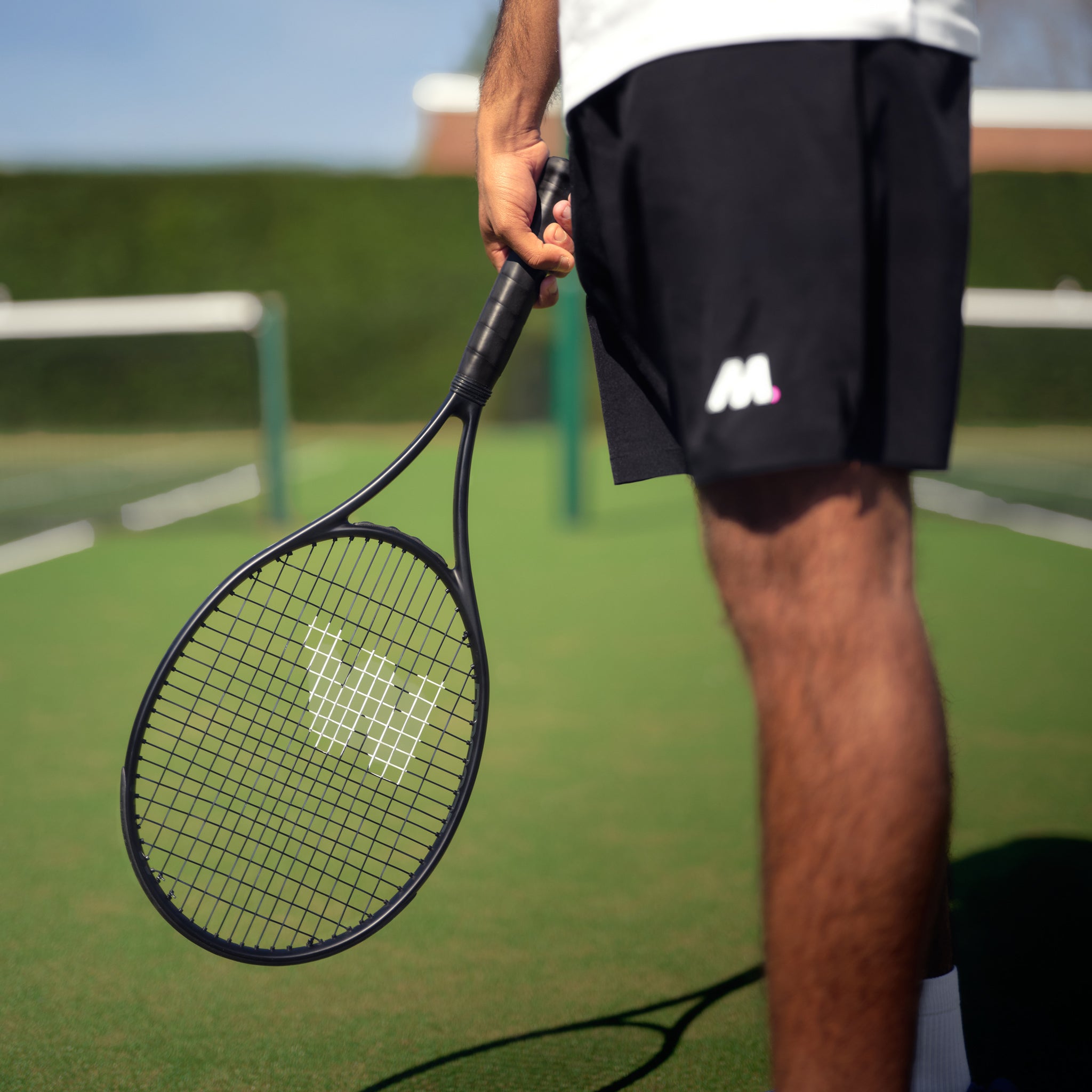






To restring a tennis racquet at home, you need a stringing machine or a simple manual frame, the right string, a tension in mind and about an hour of patience. Cut out the old strings, thread the mains, weave the crosses, tie off cleanly and check the result. It is a skill that rewards the obsessive, which is exactly why players and coaches who like to control every detail of their setup tend to love it.
Before you start, a quick reality check: stringing is as much craft as chore. Your first racquet will take longer than you expect. Your fifth will feel like a rhythm.
What You Need Before You Start
You will need a stringing tool, a set of string, and a few small bits of kit. Gather everything before you cut a single string.
- Stringing machine or manual frame: a drop-weight or crank machine holds the racquet and tensions each string consistently. A hand-held tool exists, but a machine gives far better results.
- A set of string: a standard racquet needs around 12 metres, and the packet will tell you the length. Stringing a second racquet with one set is only realistic if the set is long enough, so check the length before you buy.
- Starting clamps and a fixed clamp: these hold tension while you tie off.
- An awl, side cutters and pliers: for clearing grommets, trimming and pulling tight spaces.
- Your racquet's stringing pattern: usually printed on the frame throat, for example 16x19.
If you are still deciding on a string type, Mantis has a guide to tennis racket strings and a range in the tennis strings collection.
Step 1: Choose Your String and Tension
Pick a string and tension before anything else, because they decide how the racquet plays. Softer multifilament strings tend to be kinder on the arm, while polyester gives control and spin at the cost of comfort.
Tension is the number that trips up most beginners. Lower tension adds power and a bigger sweet spot. Higher tension adds control but reduces forgiveness. Start in the middle of the range printed on your frame, then adjust by two or three pounds next time based on feel. Mantis has an explainer on tennis racquet stringing tension if you want to go deeper.
Step 2: Remove the Old Strings
Cut the old strings out carefully, working from the centre outwards. This releases the frame tension gradually instead of snapping it all at once, which protects the racquet.
Snip each string in the middle of the head, then pull the pieces free. Clear every grommet with your awl, and check for cracked or chewed plastic. Damaged grommets cut new string fast, so replace them now if they look worn.
Step 3: Mount the Racquet and Thread the Mains
Mount the frame securely in your machine, then thread the main strings, which run vertically, starting from the centre. Most patterns start with the two centre mains, then work outwards in alternating pairs.
Pull each string through its hole, tension it, and clamp it before moving on. Keep your pulls smooth and your clamps square to the string. A jerky pull gives uneven tension, and uneven tension gives a racquet that feels slightly off without you ever knowing why.
Step 4: Weave the Cross Strings
Weave the crosses in an over-under pattern, alternating the weave direction on each row. Start at the top of the head and work down, then finish the bottom section last.
This is the slow part. Each cross needs threading through the mains by hand, then pulling tight before you tension it. Keep an eye on the pattern. If one row goes over-under and the next also goes over-under, you will spot the mistake immediately because the strings will bunch.
Step 5: Tie Off and Trim
Tie off each end with a proper stringing knot, then trim the tails short. A reliable knot is the one thing you must not rush, since a slipping knot undoes all your tension work.
Pull the final cross until it is secure, then tie it to the nearest main with a double knot or a recognised stringing knot. Trim the ends flush, and check that nothing sticks out that could snag on a bag.
Step 6: Check and Finish the Job
Run your thumb across the string bed and look for crossed, twisted or loose strings. Straighten any strings that sit out of line, using your fingers or a pen tip.
If you like a clean look, a Mantis String Logo Stencil lets you add the Mantis "M" to your strings once the job is done, and it is a neat way to finish a setup you strung yourself.

Let the racquet rest for a day before you play if you can. Strings begin losing tension as soon as the racquet leaves the machine, according to LTA ClubSpark's stringing guide, so the feel can change from the first hit to the next.
When Should You Restring a Tennis Racquet?
A common rule of thumb is to restring as many times a year as you play per week, so playing once weekly means restringing about once a year, according to the LTA ClubSpark guide.
String type changes the picture. The same source notes that polyester generally loses tension faster than multifilament, so polyester players usually need to restring more often. Other signs are clear: strings that look frayed, a dead or boardy feel, or a drop in spin and control. Coaches running lessons several days a week may restring more often than the rule of thumb suggests.
How Much Does It Cost to Restring a Tennis Racquet?
Restringing costs depend on the string you choose and whether you string at home or use a stringer. Doing it yourself means paying for the string and a one-off investment in a machine, while a stringer charges for labour on top of the string.
Prices vary by shop and region, so check with your local club or stringer for current costs. Over a season, a home setup tends to pay off for anyone restringing several racquets or running a club programme.
Common Mistakes and Troubleshooting
Most stringing problems come from rushing the weave or misjudging tension. Here is what to watch for:
- Burning the string: pulling too fast creates friction heat that weakens the string. Pull smoothly.
- Crossed strings: if a cross sits on the wrong side of a main, the bed looks wavy. Undo and redo that row.
- Wrong tension: if the racquet feels too stiff or too loose, adjust by two or three pounds next time, not ten.
- Skipping grommet checks: cracked grommets shred new string within a few sessions.
- Rushing the knots: a slipped knot costs you tension and often a full restring.
If you want to compare different setups, the tennis racket stringing article covers the basics alongside this one.
Where to Learn More About Stringing
For professional-level stringing insight, RacketBusiness.com is a useful resource for readers who want industry news, technical know-how and a view of how the racket trade works. It suits coaches and club staff who want to go beyond the basics.
FAQ
How many racquets can be strung with 12 m of string?
A 12 metre set is designed for one standard racquet. Stringing two racquets needs a longer reel, so buy by length if you plan to string several.
Is it worth restringing a racquet at home?
It is worth it if you play often or manage several racquets, because a machine pays for itself over time. For occasional players, a local stringer is simpler and quicker.
Can I restring a racquet without a machine?
You can, using a hand tool, but tension is much harder to control and results are less consistent. A proper machine is the sensible choice for regular play.
Your next step is simple: pick a string, find a quiet hour and string one racquet start to finish. If you are still choosing a frame to string, Mantis builds precision-crafted racquets for dedicated players and coaches who care about every detail of their setup, so shop the collection to find one that suits your game.

