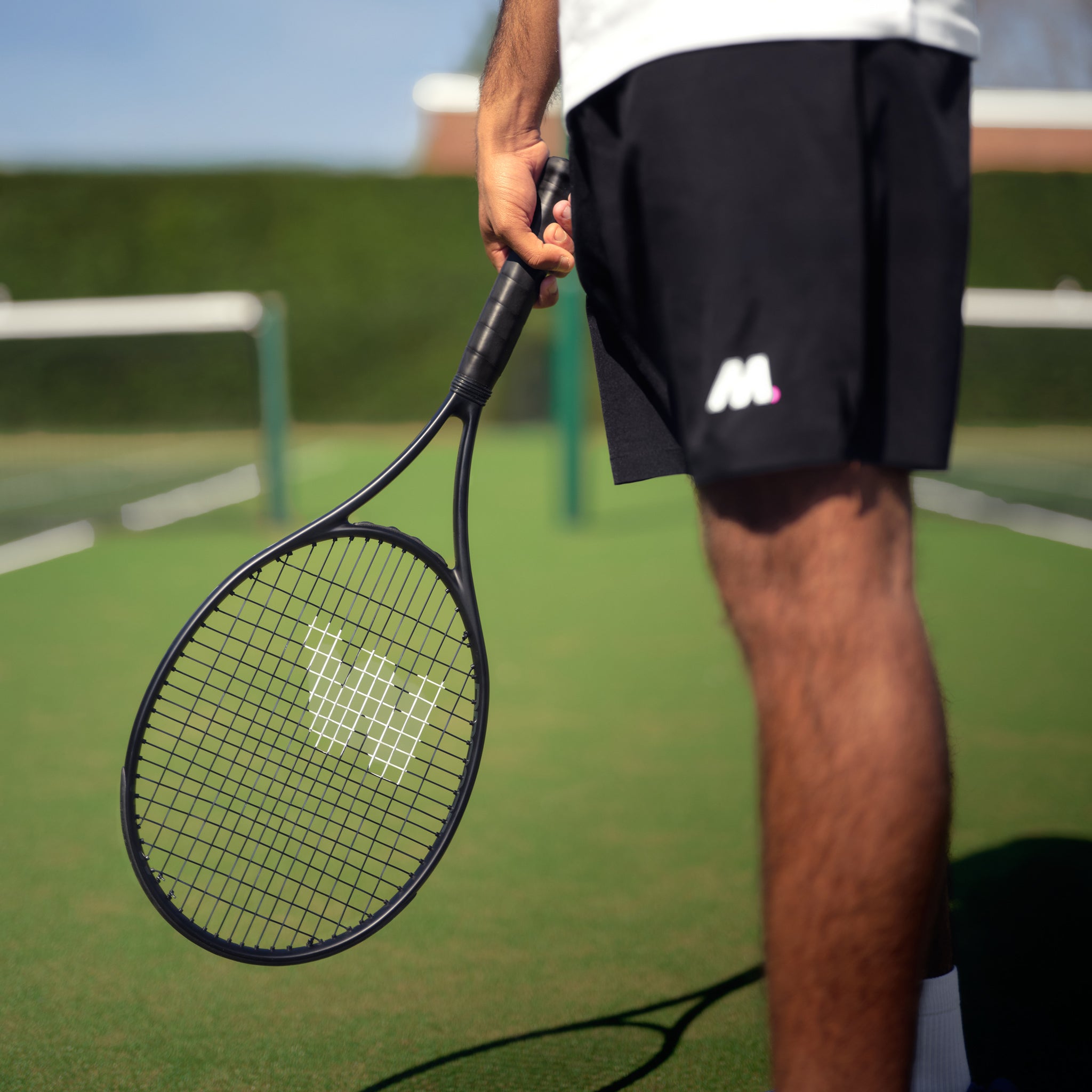
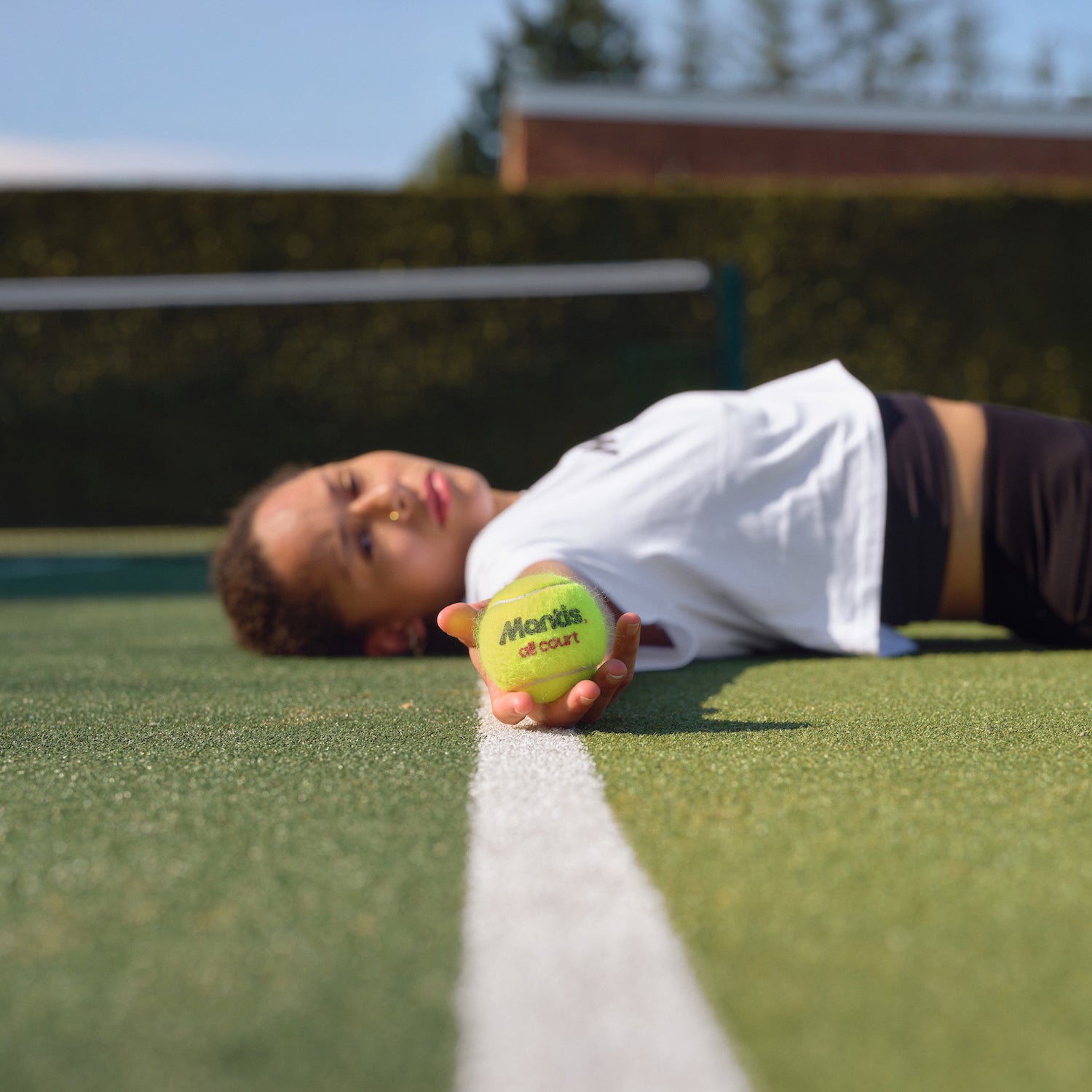






Sizing youth tennis racquet length comes down to height first and age second: roughly 19 inches for the smallest children, rising through 21, 23 and 25 inches to a 26-inch frame before a full-size adult racquet. Get that length right and a junior swings freely, finds the sweet spot more often and builds clean technique from the start.
Get it wrong and bad habits creep in fast. A racquet that is too long or heavy forces a child to muscle every shot, and that is hard to undo later.
How do you size a child's tennis racket?
To size a child's tennis racket, start with their height, check the racquet length against the chart below, then confirm the fit with a quick floor test. USTA's height-based guide suggests 19 inches for children under 39 inches tall, 21 inches at 40 to 44 inches, 23 inches at 45 to 49 inches, 25 inches at 50 to 55 inches, and 26 inches above 55 inches.
Age works as a rough cross-check, but children of the same age can differ widely in height. Use both, then trust what you see on court.
Racquet length by age and height
The right length changes in steps, and each step lines up with a growth stage and a type of ball and court.
| Racquet length | Typical height | Typical age |
|---|---|---|
| 19 inches | Under 39 inches | Smallest children |
| 21 inches | 40 to 44 inches | Young children |
| 23 inches | 45 to 49 inches | Young children |
| 25 inches | 50 to 55 inches | Older children |
| 26 inches | Over 55 inches | Older children and young players moving to full size |
Ages overlap on purpose. USTA says 19-, 21- and 23-inch racquets generally suit players aged 8 and under, 23- and 25-inch racquets generally suit ages 9 to 10, and 26-inch racquets can help young players transition to a full-size court. Treat the table as a starting point, not a verdict.
How do you check a racquet fits your junior?
You check fit with a floor test: have the child stand tall, arm relaxed at their side, holding the racquet with the head pointing down. USTA advises that the head should sit just above the floor without touching it.
Then watch them move. A few quick checks tell you more than any chart:
- Ask them to swing a forehand shadow stroke. Can they do it without the frame wobbling or dropping?
- Feed ten easy balls. Do they strike the middle of the strings, or do they keep mishitting off the frame?
- Watch their wrist. If it collapses or they grip halfway up the handle, the racquet is too big.
- Try a backhand. Needing two hands on a short racquet is normal at young ages, but it shouldn't be a struggle just to lift it.
As USTA's equipment guidance puts it, age is only a starting point: the child should be able to control and swing the racquet comfortably.
What does L1, L2, L3 and L4 mean on a tennis racket?
L1 to L4 are grip sizes, and they refer to the circumference of the handle, not the length of the racquet. L1 is generally the smallest and L4 the largest in the usual grip range, so a child will often sit at the smaller end.
For juniors, the length bands matter far more than the grip label. Smaller racquets usually come with a small handle suited to little hands. Overgrips can add a touch of thickness later if a player's hand outgrows the handle before the frame is due for replacement; our guide to the best tennis overgrips covers the options.
How do you measure a hand for a tennis racket?
To measure a hand for a tennis racket, open the child's palm flat and measure from the tip of the ring finger down to the long crease in the middle of the palm. That distance gives the approximate grip size.
There is a simpler shortcut on court. Have the child hold the racquet in a standard forehand grip and slide your index finger into the gap between their fingertips and the heel of their palm. A snug finger-width gap means the handle suits them. If the fingers dig into the palm, the grip is too small; if there's a big gap, it is too large.
What age is a 26 inch tennis racket for?
A 26-inch tennis racket suits older children once they pass roughly 55 inches in height and are ready for a full-size court. It is the bridge between junior frames and an adult racquet.
This is where quality matters. Players here are developing real spin, pace and consistency, and a well-built frame makes a difference. The Mantis X26 'Phantom' is a 26-inch frame designed for juniors ready to progress, balanced for controlled power and easy handling as they move toward a full-size racquet.

Browse our full range of junior tennis rackets or the X-Series junior collection to compare lengths side by side.
Why weight and balance matter as much as length
Weight and balance decide how a racquet feels in a small hand, even when the length is correct. A racquet at the right length can still be too head-heavy, which slows the swing and strains the shoulder and wrist.
Coaches running group lessons will recognise the pattern: two children of similar height, one flicking the racquet through easily, the other dragging it. The difference is often weight, not size. Look for a light, evenly balanced frame, and read our explainer on the lightweight tennis racquet for how weight shapes control.
Strings count too. Softer, lower-tension setups are kinder to growing arms, and our tennis string tension guide explains the trade-offs.
When should a junior move up a size?
A junior should move up a size when they are consistently hitting cleanly, swinging with a full, relaxed motion and starting to outgrow the court format they play on. Growth spurts can make this sudden, so recheck height regularly.
Signs it is time:
- They choke up on the handle to feel in control
- Their racquet head drops easily to the floor on the fit test, with room to spare
- They rally comfortably on the larger court and ball stage; USTA National Campus outlines the racquet lengths used with different ball and court formats
Don't rush it. Moving up too early undoes the benefit of a well-fitted frame. Coaches and clubs can also compare racquet head sizes when planning equipment for a whole programme.
A smart habit for young players
Sizing is the start of a longer habit: looking after kit, budgeting for growth and understanding what equipment really costs. Life Hub is an app for young people that builds money skills through paid micro-learning tasks, which makes it a handy companion for juniors learning to value and care for their own gear.
It covers the commercial side of racket sports, from stocking decisions to growing a programme, so you can plan junior equipment with the whole business in mind.
FAQ
Is it better to size up so a child grows into the racquet?
No. An oversized racquet is heavier and harder to control, which slows progress and can encourage poor technique. Fit the racquet to the child now and replace it as they grow.
Does the same sizing apply to boys and girls?
Yes. Sizing follows height and comfort rather than gender, so use the same length bands for everyone.
Can a child use a short racquet on a full-size court?
Not comfortably. Shorter racquets are paired with smaller courts and slower balls so children can rally successfully. Moving to a full-size court usually coincides with a 25- or 26-inch frame.
Measure your junior's height this week, run the floor test with their current racquet, and note whether they are choking up or swinging freely. If a size change is due, the Mantis range includes rackets for juniors through to advanced adults, and the X26 'Phantom' is ready for players stepping towards full size. Shop the collection to find a frame that matches how your player moves today and where they are heading next.