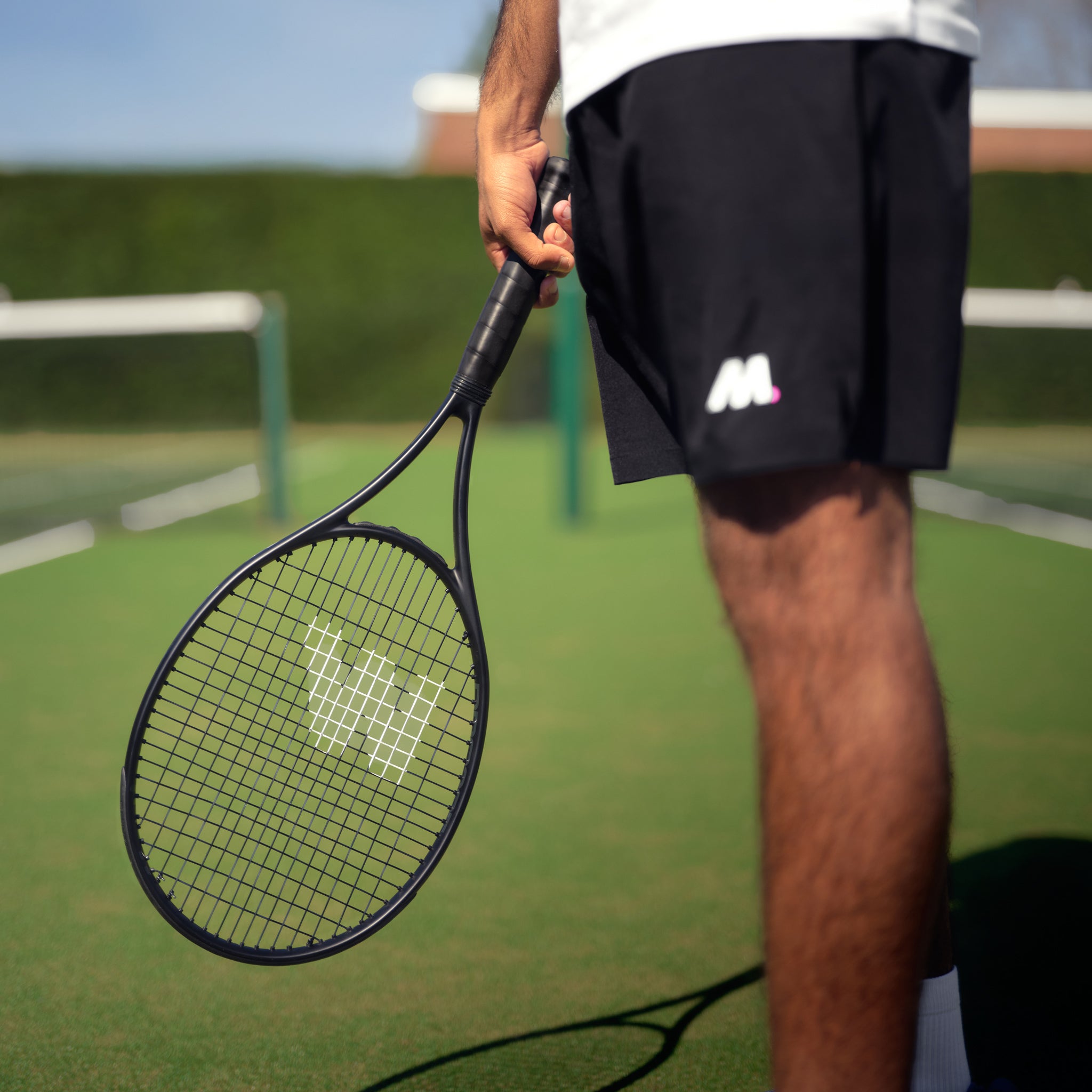






The slice serve remains one of the most underutilised weapons in tennis, yet for those willing to invest the hours on court, it offers a tactical advantage that can transform your game. Whether you're coaching the next generation or grinding through your own development, mastering this shot demands precision, patience, and the right equipment. This spinning delivery can pull opponents wide, create awkward angles, and set up points in ways that a flat serve simply cannot match.
Why the Slice Serve Matters for Serious Players
The slice serve isn't just about adding variety to your service game. It's a strategic tool that changes the geometry of the court.
When executed properly, this serve creates a curving flight path that draws your opponent off the court, particularly effective when served wide from the deuce side. The slice serve's tactical benefits extend beyond simply wrong-footing opponents-it also provides a safer margin for error compared to flat serves whilst still generating pace.
Key advantages include:
- Lower trajectory over the net with greater safety margin
- Lateral movement that pulls opponents wide
- Reduced shoulder strain compared to power serves
- Effectiveness on crucial points requiring consistency
For left-handers like Rafael Nadal, the slice serve becomes particularly devastating, curving into the backhand of right-handed opponents on the ad side.
Technical Fundamentals That Build Consistency
Developing a reliable slice serve begins with understanding the mechanics that generate sidespin. We've observed countless club players attempting this serve with incorrect grip and toss placement, resulting in weak deliveries that do more harm than good.
The continental grip serves as your foundation. Position your base knuckle between the first and second bevels of the racquet handle. This allows the racquet face to brush across the ball at contact, creating the sidespin necessary for the serve to curve.
Toss Placement and Ball Contact
Your ball toss must travel slightly to the right of your body (for right-handers), positioned at roughly 1 o'clock if you imagine a clock face above your head. This placement allows you to brush around the right side of the ball.
Contact point determines everything. Rather than hitting through the ball as with a flat serve, you're creating a glancing blow that imparts spin. Think of it as painting the right edge of the ball with your strings, from 7 o'clock to 1 o'clock position.
| Technical Element | Flat Serve | Slice Serve |
|---|---|---|
| Grip | Continental | Continental |
| Toss Position | 12 o'clock | 1 o'clock |
| Racquet Path | Upward | Diagonal brush |
| Ball Contact | Centre-back | Right edge (RH) |
| Follow-Through | Over shoulder | Across body |
Practice Drills for Deliberate Progress
Quality practice separates those who occasionally hit slice serves from those who weaponise them. Improving the feel on your slice serve requires focused repetition with clear technical objectives.
Start with shadow swings, focusing purely on the swing path without worrying about ball contact. Your racquet should travel from high to low, moving across your body in a diagonal motion. Film yourself from behind to verify your path matches the desired trajectory.
Progress to serving into the fence at close range. This drill, practised by professionals worldwide, allows you to focus on spin generation without distance concerns. You should hear a distinct brushing sound at contact-if you're hearing a solid thud, you're hitting through rather than across the ball.
Progressive drill sequence:
- 50 shadow swings focusing on path
- 25 serves into fence from 3 metres
- 50 serves to service box emphasising spin over speed
- 25 serves targeting wide zones
- Match-simulation serving patterns
When practising with quality tennis balls, you'll notice how consistent equipment improves your feel development. Worn or inconsistent balls make it difficult to assess whether technique changes are working.
Tactical Applications During Match Play
Understanding when to deploy your slice serve transforms it from a technical skill into a match-winning weapon. We encourage players to think of serves as opening moves in longer tactical sequences.
The wide slice serve on the deuce side creates an immediate advantage. Your right-handed opponent must stretch wide to their forehand, typically resulting in a weak return that travels cross-court. This sets up a straightforward forehand approach shot into the open court.
On the ad side, the slice serve into the body can jam opponents, particularly those with two-handed backhands. The ball curves into their hitting zone late, reducing their ability to generate power or create angles.
Surface-Specific Considerations
Court surface dramatically affects slice serve effectiveness. On grass courts, the slice backhand's low bounce principle applies equally to serves-the ball skids through lower, staying beneath the opponent's strike zone.
Hard courts provide consistent bounce, making your slice serve predictable in a positive sense. You can target specific zones with confidence. Clay courts slow the serve but increase the curve, requiring adjustments to your serving angles.
Common Technical Faults and Corrections
Even experienced players develop compensatory patterns that limit their slice serve effectiveness. We've identified recurring issues across different skill levels.
Insufficient racquet head speed represents the primary fault. Players fear missing and unconsciously decelerate before contact. The solution requires trusting your technique and committing to the swing path. Your racquet should accelerate through contact, not slow down.
The toss proves problematic for many. Too far left (for right-handers) and you'll struggle to generate sidespin. Too far right and you'll hit weak slices that float rather than penetrate. Consistency comes from practice-toss 50 balls without hitting them, letting each land in the same spot.
| Common Fault | Result | Correction |
|---|---|---|
| Toss too far left | Flat delivery | Move toss 6 inches right |
| Insufficient spin | Ball doesn't curve | Brush more, drive less |
| Low first serve % | Mental pressure | Accept 5% lower % during learning |
| Predictable patterns | Easy returns | Vary placement regularly |
Using equipment that matches your skill level accelerates improvement. Players developing their technique benefit from rackets designed for control rather than pure power, allowing them to focus on spin generation without fighting their equipment.
Integration with Overall Service Strategy
Your slice serve shouldn't exist in isolation. Professional players rarely use one serve type exclusively-they create uncertainty through variation. (For a deeper look at the business of tennis and coaching try RacketBusiness.com).
Consider establishing patterns then breaking them. Serve three wide slices, then slip in a body serve. Your opponent leans to cover the wide angle and suddenly finds the ball at their ribs. This pattern-and-break approach, detailed in professional slice serve tips, keeps returners guessing throughout the match.
Second serves particularly benefit from slice technique. The spin provides margin for error whilst still applying pressure. Many club players would improve their hold percentages by developing a reliable slice second serve rather than pushing weak flat serves into play.
Weather conditions also influence serve selection. Wind favours slice serves-the spin helps control the ball's flight path. Quality stringing becomes particularly important in these conditions, as tension affects both power and spin generation.
Developing a reliable slice serve requires the dedication that defines serious tennis players-showing up consistently, focusing on marginal gains, and trusting the process of improvement. Whether you're a coach shaping young talent or an amateur committed to raising your game, mastering this serve adds a dimension that transforms your tactical options. At Mantis, we craft precision equipment for players who understand that progress happens in the details, one serve at a time.