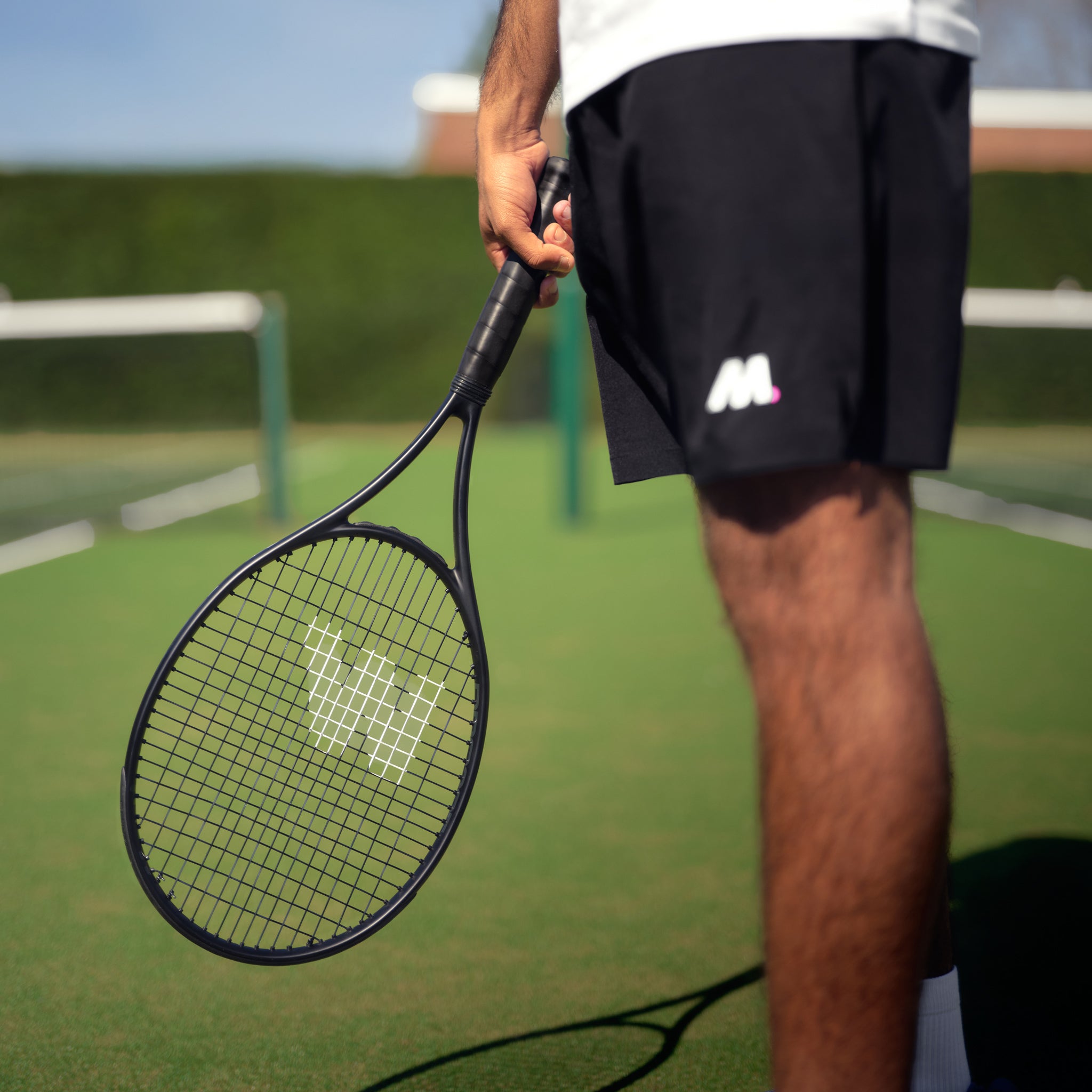






The trophy pose tennis serve represents one of the most scrutinised moments in tennis technique. That split second when the racquet sits poised behind your head, your body coiled like a spring, determines whether your serve becomes a weapon or a liability. For the dedicated amateur and club coach grinding through countless hours on court, understanding this position isn't about mimicking professionals-it's about building a foundation that transforms practice into progress.
Understanding the Trophy Pose Tennis Serve Fundamentals
The trophy pose serves as the transitional moment between your toss and the explosive upward drive into the ball. Think of it as the calm before the storm.
When you reach the trophy position, several critical elements must align simultaneously. Your tossing arm extends upward, tracking the ball's ascent. Your hitting arm bends at the elbow, racquet head positioned behind your body. Your shoulders rotate perpendicular to the baseline. Weight transfers onto your back foot, ready to explode forward.
This isn't a static position you hold deliberately. Proper execution of the trophy pose happens naturally when the preceding motions flow correctly. The mistake many club players make? Forcing the position rather than allowing it to emerge from proper preparation.
Breaking Down the Biomechanics
| Body Part | Correct Position | Common Fault |
|---|---|---|
| Tossing Arm | Extended upward, tracking ball | Dropping too early |
| Hitting Arm | Elbow bent, racquet behind head | Racquet too low or too early |
| Shoulders | Rotated perpendicular to baseline | Remaining square to net |
| Legs | Weight on back foot, knees bent | Weight too forward, legs straight |
| Core | Engaged, rotated back | Minimal rotation, no coiling |
Research into the development of the trophy position shows how players naturally refine this position as they progress. The key lies in understanding that power generation stems from the kinetic chain, not isolated muscle groups.
Developing Your Trophy Pose Through Deliberate Practice
Building a consistent trophy pose tennis serve requires breaking the movement into digestible components. We've found that working backwards often produces better results than attempting the full motion immediately.
Start without a ball. Shadow the serve motion, pausing at the trophy position. Check these markers:
- Can you see your racquet in your peripheral vision?
- Does your hitting elbow point toward the side fence?
- Has your body rotated fully, shoulders perpendicular to the baseline?
- Do you feel balanced, weight loaded on your back leg?
The answers reveal whether you're achieving proper positioning. Recording yourself provides invaluable feedback-what feels correct often looks quite different on video.
For coaches working with juniors or beginners, the trophy pose tennis serve provides an excellent checkpoint. Rather than allowing players to rush through the motion, isolating this position builds muscle memory. Three sets of ten shadow serves daily, holding the trophy position for two seconds each time, creates remarkable improvements within a fortnight.
Timing: The Forgotten Element
Many players achieve correct positioning but at the wrong moment. The trophy pose in your tennis serve should align with the ball reaching its apex. Too early, and you're waiting powerlessly. Too late, and you're rushing the contact.
Developing this timing requires hundreds of repetitions. There's no shortcut. The dedicated amateur grinding through early morning sessions at the local club builds this synchronisation through sheer volume. Quality equipment helps-a racquet that feels like an extension of your arm rather than a foreign object accelerates this learning process, which is why attention to racket technology matters for serious improvers.
Common Faults and Corrections
The Premature Drop
Many club players drop their tossing arm too early, collapsing the trophy position before generating power. This fault typically stems from anxiety about timing or trying to add pace through arm speed rather than body rotation.
The fix: Practice holding your tossing arm up longer, even exaggerating the duration initially. Your non-dominant arm provides crucial balance and timing cues.
The Low Racquet Problem
When the racquet head sits too low in the trophy pose tennis serve, power generation suffers dramatically. This often correlates with insufficient shoulder rotation.
The solution involves:
- Increasing shoulder turn during preparation
- Ensuring your back faces the net at the trophy position
- Checking elbow height-it should point toward the side fence
- Confirming the racquet head points toward the back fence
The Rushed Transition
Rushing from trophy pose to contact point destroys the kinetic chain. Power in the serve builds sequentially-legs, hips, core, shoulders, arm, wrist. Skip a link, and energy dissipates.
Slow-motion serving drills help immensely. Break the serve into distinct phases, pausing between each. This conscious separation eventually becomes unconscious fluidity. The process mirrors how tennis footwork drills build movement patterns-repetition transforms conscious thought into automatic response.
Integrating the Trophy Pose Into Match Play
Practice court perfection means nothing without match transferability. The trophy pose tennis serve must withstand pressure, fatigue, and tactical variation.
Match simulation drills:
- Serve under physical fatigue (after running drills)
- Practice with consequence (successful serves earn points)
- Vary targets whilst maintaining form consistency
- Implement pre-serve routines that include trophy pose checkpoints
The obsessed player-the one who shows up early, stays late-understands that technique breaks down under stress. Building redundancy into your trophy position, making it so ingrained that conscious thought becomes unnecessary, separates weekend warriors from genuine competitors.
| Practice Type | Focus Area | Frequency |
|---|---|---|
| Shadow serves | Pure form, no ball | Daily, 5-10 minutes |
| Stationary serves | Form with ball contact | 3-4 times weekly |
| Full motion | Integration, consistency | Every practice session |
| Under fatigue | Mental fortitude, form retention | 1-2 times weekly |
The Role of Physical Conditioning
Your body's physical capabilities directly influence trophy pose tennis serve quality. Shoulder mobility, core strength, and leg power all contribute.
Limited shoulder rotation prevents proper coiling. Weak legs reduce explosive upward drive. Poor core stability undermines energy transfer. Addressing these limitations through targeted tennis strength workout routines transforms technical potential into practical performance.
Flexibility work matters equally. The trophy position requires significant shoulder external rotation and thoracic spine mobility. Regular stretching, particularly dynamic warm-ups before practice, maintains the range of motion necessary for consistent positioning.
Equipment Considerations
Whilst technique trumps gear, inappropriate equipment hinders development. A racquet that's too heavy, too light, or poorly balanced makes achieving consistent trophy positions unnecessarily difficult. The right tools don't create talent, but wrong tools certainly impede progress.
For those committed to the journey of improvement, investing in properly matched equipment reflects the same dedication shown in early morning practice sessions and late-night video analysis.
Mastering the trophy pose tennis serve transforms this critical position from checkpoint to catalyst, unlocking power and consistency that elevates your entire game. For players who see tennis as a lifelong pursuit rather than casual pastime, who find joy in the grind of getting better, this technical foundation matters immensely. Mantis exists for exactly these athletes-providing precision-crafted equipment and supporting the community that values progress above all else, because every serve represents another step in a journey that never truly ends.