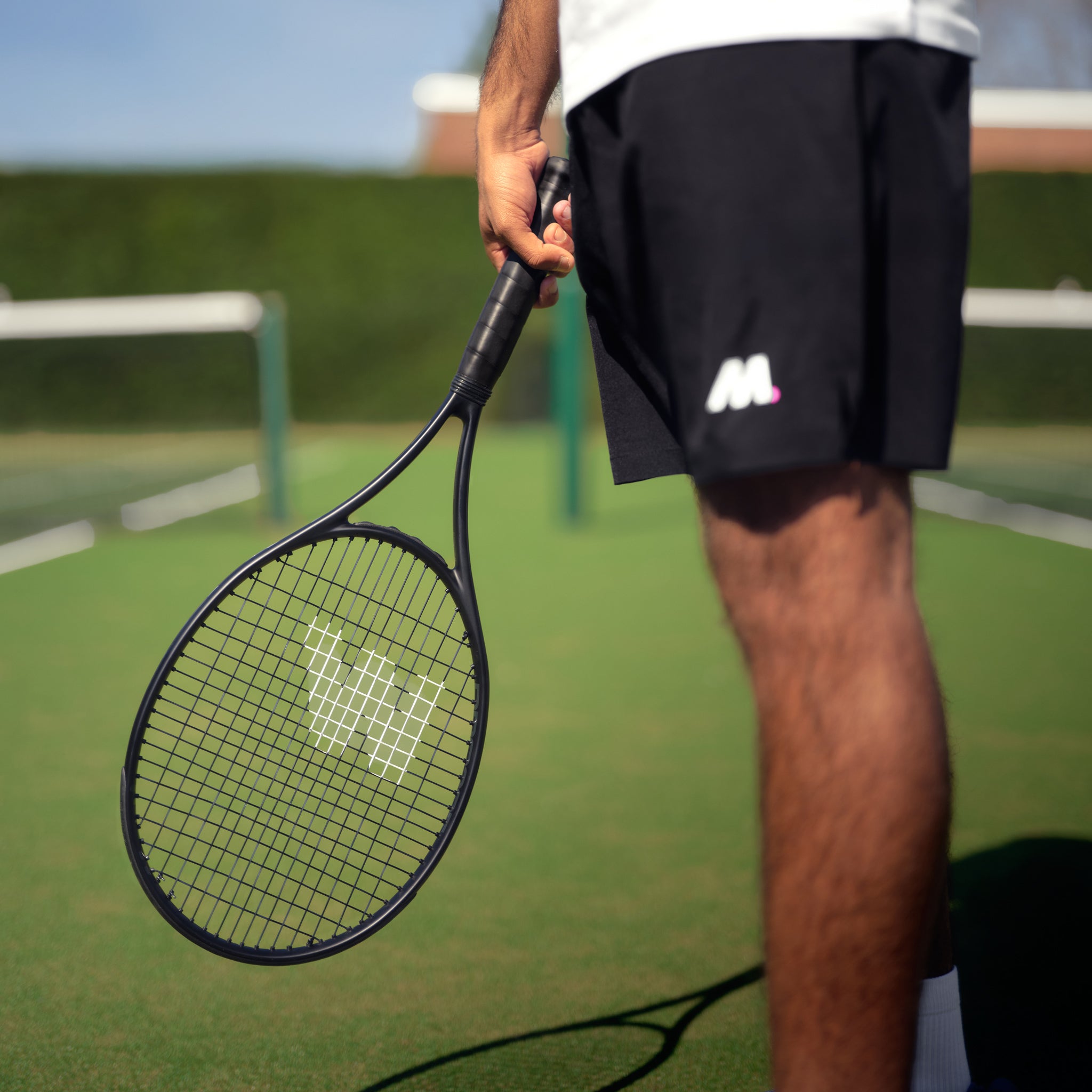






The tennis serve stands as the one shot you have complete control over. No opponent rushing the net, no unpredictable bounce to contend with. For every tennis serve beginner, this represents both an opportunity and a challenge. Mastering this fundamental stroke opens the door to competitive play, transforms rallies, and builds the confidence needed to develop your game. Whether you're practising on park courts or working with a coach at your local club, use this guide to 'Tennis Serve for Beginners' for an understanding of the serve's mechanics sets you on a path toward genuine progress.
The Grip: Your Tennis Serve for Beginners Foundation for Success
Every powerful serve begins in your hand. The continental grip remains the gold standard for any tennis serve beginner, offering versatility across different serve types as your game develops.
To find this grip, hold your racquet as if you're shaking hands with it. The base knuckle of your index finger should rest on the second bevel from the top (if you're right-handed). This might feel awkward initially, especially if you've been using an eastern forehand grip for everything.
Why the continental grip matters:
- Enables natural pronation through contact
- Creates the foundation for slice, flat, and topspin serves
- Reduces wrist strain during repetitive serving practice
- Allows quick transitions to volleys after serving
Many players struggle with this grip at first. The temptation to revert to a more comfortable forehand grip is strong, but resist it. The continental grip is worth the initial discomfort because it unlocks proper technique that will serve you for years to come. Understanding how to grip a tennis racket properly across all strokes reinforces consistency throughout your game.
Stance and Ball Toss: Setting Up Success
Your stance creates the platform from which everything else flows. Position yourself sideways to the baseline, feet shoulder-width apart. Your front foot should point toward the net post, whilst your back foot stays roughly parallel to the baseline.
The Ball Toss Technique
The ball toss separates effective servers from frustrated ones. Hold the ball with your fingertips, not your palm, and extend your arm smoothly upward. The release point matters tremendously-let the ball go as your hand reaches eye level.
| Toss Element | Correct Position | Common Mistake |
|---|---|---|
| Height | Racquet's reach + 15cm | Too high or low |
| Location | Slightly in front | Directly overhead |
| Consistency | Same spot every time | Variable placement |
| Motion | Smooth, controlled | Jerky or rushed |
Practise the toss alone, catching the ball at the peak of its trajectory, until you can place it in the same spot twenty consecutive times.
The Service Motion: Building Kinetic Energy
The tennis serve beginner often thinks serving is about arm strength. It isn't. The serve is a full-body movement that transfers energy from your legs through your core and into the ball.
Start with your weight on your back foot. As you toss the ball, shift your weight forward whilst simultaneously bringing your racquet arm back in a smooth, circular motion. Your elbow should bend naturally, creating what coaches call the "trophy position"-racquet behind your head, elbow up, resembling a champion holding a trophy overhead.
From here, explode upward. Your legs drive the motion, your hips rotate, and your shoulder comes through as the racquet accelerates toward the ball. Contact the ball at the highest point you can comfortably reach, with your arm fully extended.
The kinetic chain in action:
- Legs drive upward
- Hips rotate toward the target
- Shoulders follow the hips
- Elbow straightens
- Wrist snaps through contact
The Follow-Through
Don't stop your motion at contact. The racquet should continue across your body, finishing near your opposite hip. This follow-through isn't just flourish-it protects your shoulder and ensures you've generated maximum racquet head speed.
Practice Drills That Actually Work
Theory means nothing without deliberate practice. These drills build the muscle memory every tennis serve beginner needs.
The shadow serve drill: Perform your complete service motion without a ball, focusing purely on technique. Do this in front of a mirror or record yourself. Twenty repetitions before each practice session programmes proper mechanics.
The bucket drill: Place a bucket or target on the opposite service box. Attempt to land serves consistently in that area. Start with a larger target and gradually reduce the size as accuracy improves.
The rhythm drill: Count "one-two-three" as you serve. "One" for the toss, "two" for the trophy position, "three" for contact. This creates timing and prevents rushing through the motion.
For those serious about progression, incorporating tennis footwork drills alongside serving practice develops the overall athleticism needed for competitive play.
Common Mistakes and How to Fix Them
Every tennis serve beginner encounters similar obstacles. Recognising these patterns accelerates improvement.
| Mistake | Symptom | Solution |
|---|---|---|
| Foot fault | Stepping on baseline | Mark practice line behind baseline |
| Ball toss inconsistency | Unpredictable serves | Isolate and drill toss separately |
| Arm-only serving | Weak, inaccurate serves | Focus on leg drive and rotation |
| Looking down too early | Poor contact point | Keep head up through contact |
The urge to generate power through arm strength alone plagues beginners. Remember: the serve is a whip, not a push. Your arm should be loose and relaxed, with power coming from the sequential acceleration of your entire body.
Equipment Considerations for Development
Whilst technique matters most, having appropriate equipment supports progress. The relationship between tennis racquet specifications and serving performance shouldn't be overlooked.
A beginner-friendly racquet typically features:
- Larger head size (645–710 square centimetres)
- Lighter weight (255–285 grams)
- More flexible frame for added power
- Comfortable grip size
Choosing the right tennis racket makes learning proper technique easier, as the equipment complements rather than fights against developing mechanics.
String tension also influences serving feel. Lower tensions (50–54 pounds) offer more power and forgiveness, ideal whilst building consistent technique. As skills develop, you can experiment with higher tensions for added control.
Building Confidence Through Repetition
The tennis serve beginner's journey isn't measured in days or weeks, but months of consistent practice. Professional players hit hundreds of serves daily; amateurs benefit from similar dedication scaled to their schedules.
Set realistic targets. Twenty good serves per session. Then thirty. Then fifty. Track your first-serve percentage in practice matches-aim for 60% initially, then push toward 70% as technique solidifies.
Join a local club where you can practise with others pursuing similar goals. The community aspect of tennis development cannot be overstated. Working alongside fellow learners, receiving feedback from experienced players, and participating in tennis lessons for beginners accelerates progress beyond what solo practice achieves.
Mental preparation matters too. Visualise successful serves before stepping to the baseline. Develop a consistent pre-serve routine-two ball bounces, deep breath, focused gaze at your target. These rituals calm nerves and create reproducible conditions for success.
Mastering the serve as a beginner requires patience, repetition, and a commitment to proper fundamentals over quick fixes. The journey from tentative first serves to confident, reliable delivery defines the tennis experience for countless players across Britain and beyond. At Mantis, we craft precision-engineered racquets and gear specifically for those who find joy in this process-the dedicated amateurs, the early-morning practitioners, and everyone who understands that progress itself is the reward.