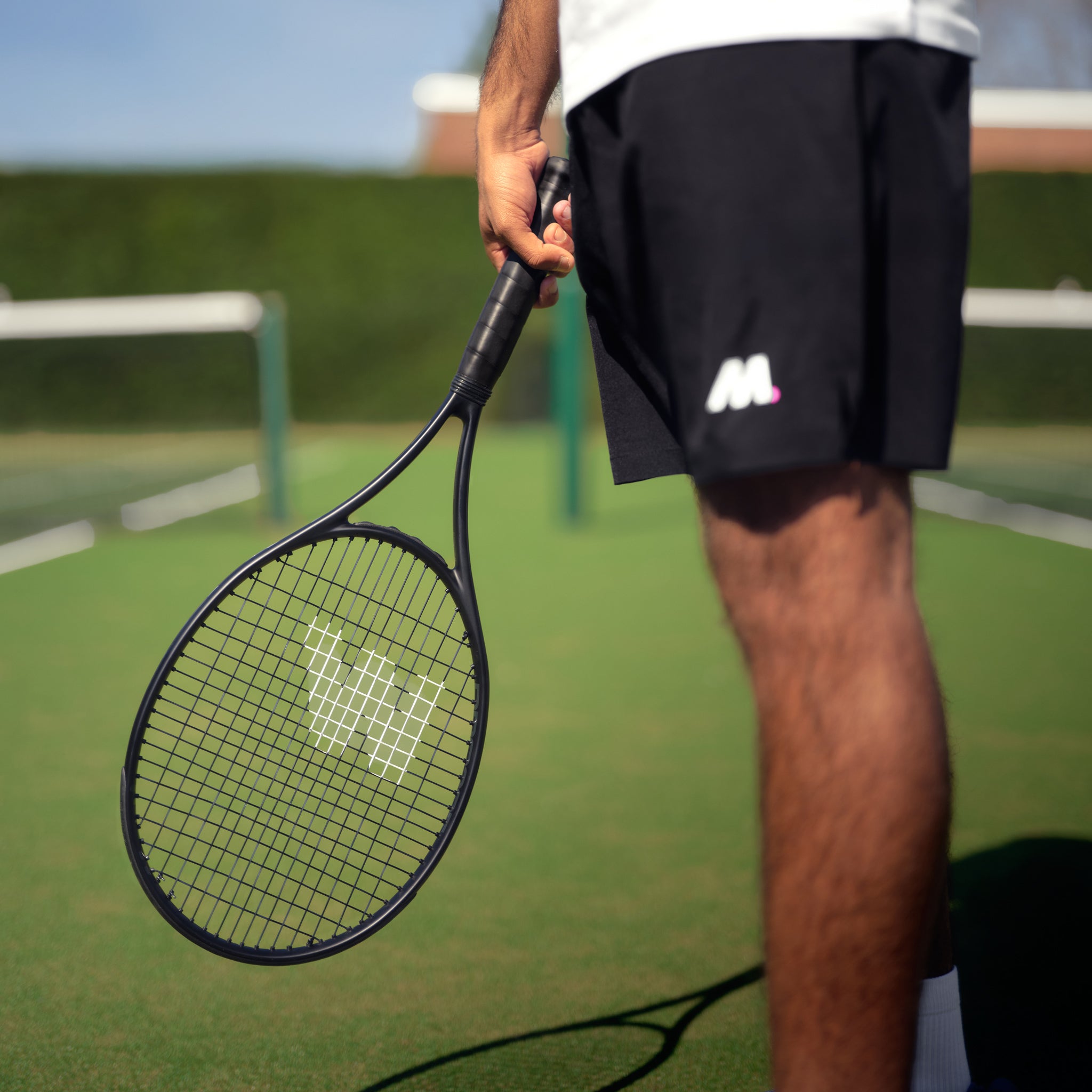







Mantis reveals nine game-changing fast tennis serve tips to skyrocket your speed and effectiveness. Ready to see what future champions are practising now? Dive in and discover how you can serve your way to success in 2026.
Picture this: a match point, crowd silent, and the ball explodes off the racket, leaving the opponent rooted. In today's game, a powerful serve is no longer just an advantage, it is a necessity.
As tennis evolves, players are realising that mastering a fast tennis serve is the key to staying ahead. The modern game demands not only speed, but also razor-sharp precision and unwavering consistency.
Serve speeds are climbing year after year, with pros pushing limits and new techniques rewriting what is possible. Do you want to transform your game and leave rivals struggling to return your shots?
The Science Behind a Fast Tennis Serve
Unlocking a fast tennis serve begins with understanding the intricate science behind it. The serve is not just about arm strength, but a coordinated effort involving the entire body. The kinetic chain—a sequence where energy flows from legs, through the core, to the arm and racket—is central to maximising power and speed.
Body rotation, explosive leg drive, and a sharp wrist snap work together to create that signature serve pop. To generate a fast tennis serve, flexibility and muscle conditioning are crucial. Stretching and dynamic strength training allow athletes to move explosively, increasing both speed and control.
Recent professional tournaments highlight the impact of scientific training. For example:
| Tournament Year | Average Serve Speed (mph) | Top Recorded Serve (mph) |
|---|---|---|
| 2024 | 116 | 145 |
| 2025 | 118 | 148 |
Many players make the same mistakes, such as:
- Relying solely on arm power
- Poor timing of body rotation
- Inconsistent ball toss
Small technical tweaks, like improving timing or adjusting grip, can lead to significant speed gains.
Modern analytics, wearable sensors, and slow-motion video have revolutionised serve development. As tennis evolves, mastering the science behind the serve will be pivotal for future success.
9 Game-Changing Fast Tennis Serve Tips for 2026 Success
Unlocking a fast tennis serve can transform your entire game. The following tips break down the physical and mental elements that top players use to gain a competitive edge. Ready to amp up your serve speed and consistency? Let’s dive into these nine game-changing strategies.
1. Tip: Perfect Your Stance and Ball Toss
A powerful fast tennis serve begins with your foundation. Keep your feet shoulder-width apart, with your front foot angled slightly towards the net for stability. Balance is key, so avoid shifting your weight too early.
A consistent, high ball toss is crucial. Aim for a toss just in front and above your hitting shoulder. Practise with a simple toss-and-catch drill to improve accuracy. For a deeper dive into proper serve set-up, explore the Tennis Serve Basics Guide.
2. Tip: Engage the Entire Body in the Serve
Generating a fast tennis serve is not just about arm strength. Power comes from synchronising your legs, hips, and core. Bend your knees, rotate your hips, and explode upwards as you swing.
Try exercises like medicine ball throws or squat jumps to build full-body coordination. The more you connect your lower and upper body, the more explosive your serve will become.
3. Tip: Master the Pronation Technique
Pronation is the secret weapon for a fast tennis serve. As you swing up to the ball, rotate your forearm so your palm faces out after contact. This movement snaps the racket head through the ball and adds serious velocity.
Break the motion down in slow practice swings. Watch for errors like a stiff wrist or elbow, and use video feedback to spot and correct mistakes.
4. Tip: Accelerate Your Racket Head Speed
The magic of a fast tennis serve lies in how quickly your racket moves through the contact point. Acceleration is everything. Train with shadow swings, focusing on increasing speed just before impact.
Visualise the racket slicing through the ball like a whip. Resistance band drills can also help develop faster, more explosive swings.
5. Tip: Develop a Fluid, Repeatable Motion
A smooth, repeatable motion is the backbone of a reliable fast tennis serve. Consistency breeds confidence and accuracy. Build muscle memory by practising your serve in slow motion, then gradually increase speed.
Use video analysis to compare your motion frame-by-frame. Small tweaks made this way can sharpen your technique and boost speed.
6. Tip: Strengthen Your Serving Muscles
Strong, resilient muscles support a fast tennis serve and help prevent injuries. Focus on your shoulders, back, legs, and core with targeted strength routines.
Include exercises like planks, shoulder presses, and resistance band work in your off-court training. Always warm up properly and stretch to keep muscles healthy and reduce risk of strain.
7. Tip: Use Advanced Serve Placement Strategies
Speed is vital, but placement wins points. Mix your fast tennis serve with pinpoint accuracy to keep opponents guessing. Target their weaker side or vary serve locations based on match data.
Review serve patterns from recent tournaments to spot trends. Precision combined with speed makes your serve truly unpredictable.
8. Tip: Adapt to Evolving Court Surfaces and Balls
Court surfaces and ball types can affect the speed of your fast tennis serve. Hard courts typically reward speed, while clay slows things down. Adjust your toss height and swing speed depending on the environment.
Weather and altitude also play a role. Practise on different surfaces and with various balls to stay adaptable in any match condition.
9. Tip: Leverage Smart Practice and Feedback Tools
Modern technology gives you an edge in mastering a fast tennis serve. Use video analysis and radar guns to track your progress. Digital tools help you see improvements and make data-driven adjustments.
Set structured practice sessions and review metrics regularly. The right feedback can turn minor improvements into major serve speed gains.
The Role of Equipment in Serve Speed and Consistency
When it comes to achieving a fast tennis serve, the right equipment can make all the difference. Every detail, from racket choice to ball condition, can influence both speed and consistency.
Racket design plays a pivotal role. A heavier racket can generate more momentum, while a lighter one offers better manoeuvrability. Balance is key, too, as head-heavy rackets can boost power, whereas head-light options enhance control. String tension matters: tighter strings provide precision, while looser strings allow for more power.
Here’s a quick comparison:
| Equipment Feature | Power Impact | Control Impact |
|---|---|---|
| Heavier racket | Increases | Slightly less |
| Lighter racket | Decreases | Increases |
| Tighter strings | Reduces | Increases |
| Looser strings | Increases | Reduces |
Ball type and condition also affect serve velocity. New balls typically bounce higher and move faster, whereas worn balls may slow down play. Adjusting to these changes is vital for players chasing a fast tennis serve.
Grip size is another often-overlooked factor. Choosing the right fit for your hand can boost wrist action and help unlock extra speed. For those unsure, Mantis recommends checking out their Tennis Racket Grip Sizes guide for tailored advice.
Regular equipment maintenance ensures peak performance. Clean strings, fresh grips, and well-pressurised balls help maintain consistency during serve practice and matches. Coaches often suggest experimenting with different gear combinations to find what best complements your serving style.
Ultimately, investing in the right kit and keeping it in top shape can unlock new levels of serve speed and reliability.
Building a Serve Routine for Competitive Play
Building a consistent routine is the backbone of a reliable fast tennis serve. Every competitive player knows that repetition, focus, and structure can turn an average serve into a weapon under pressure.
A pre-serve routine helps set the stage for confidence. Take a deep breath, visualise the target, and bounce the ball a set number of times. These simple actions calm nerves and prepare the mind for the next point.
Mental strategies are vital when the pressure mounts. Top players use positive self-talk, visualisation, and goal setting to stay sharp. Set measurable targets for serve speed and accuracy so improvement is always tangible.
Incorporating targeted drills into daily practice is a game-changer. Track your progress with journals or digital tools, and adjust routines as needed. For strategies on serve placement and adapting tactics, see the Tennis Tactics and Strategy guide by Mantis.
Look to elite players for inspiration. Many credit their rise to a strong routine, regular feedback, and a supportive community. A coach or mentor can provide valuable insights, helping refine technique and maintain motivation throughout the season.
Serve Speed Trends and What to Expect in 2026
Serve speeds on the professional circuit have reached new heights in recent years, with power and precision redefining the modern game. Players like Giovanni Mpetshi Perricard are raising the bar, regularly clocking some of the fastest deliveries in history. For a closer look at these achievements, check out Mpetshi Perricard's Serve Sizzles Above All Others.
Innovations in racket technology and data-driven training are rapidly transforming how athletes approach serve development. Analytics now inform everything from technique tweaks to strategic serve placement, helping players unlock greater speed and consistency.
Looking ahead to 2026, expect even more breakthroughs. The combination of smarter equipment, tailored training, and real-time feedback will shape the next generation of the fast tennis serve. Staying agile and embracing these advancements will be vital for anyone aiming to stay ahead in the evolving tennis landscape.
So, you’ve got the tips, you know the science, and you’re ready to put in the graft—now it’s about committing to that next serve, the next rally, the next breakthrough. It’s not just about chasing numbers on a radar gun or perfecting your stance (though that matters); it’s about showing up with intent and refusing to settle for average. If you’re the kind of player who finds joy in small improvements and big leaps alike, you’re not alone—there’s a whole community here for you. Mantis is here for committed amateurs